
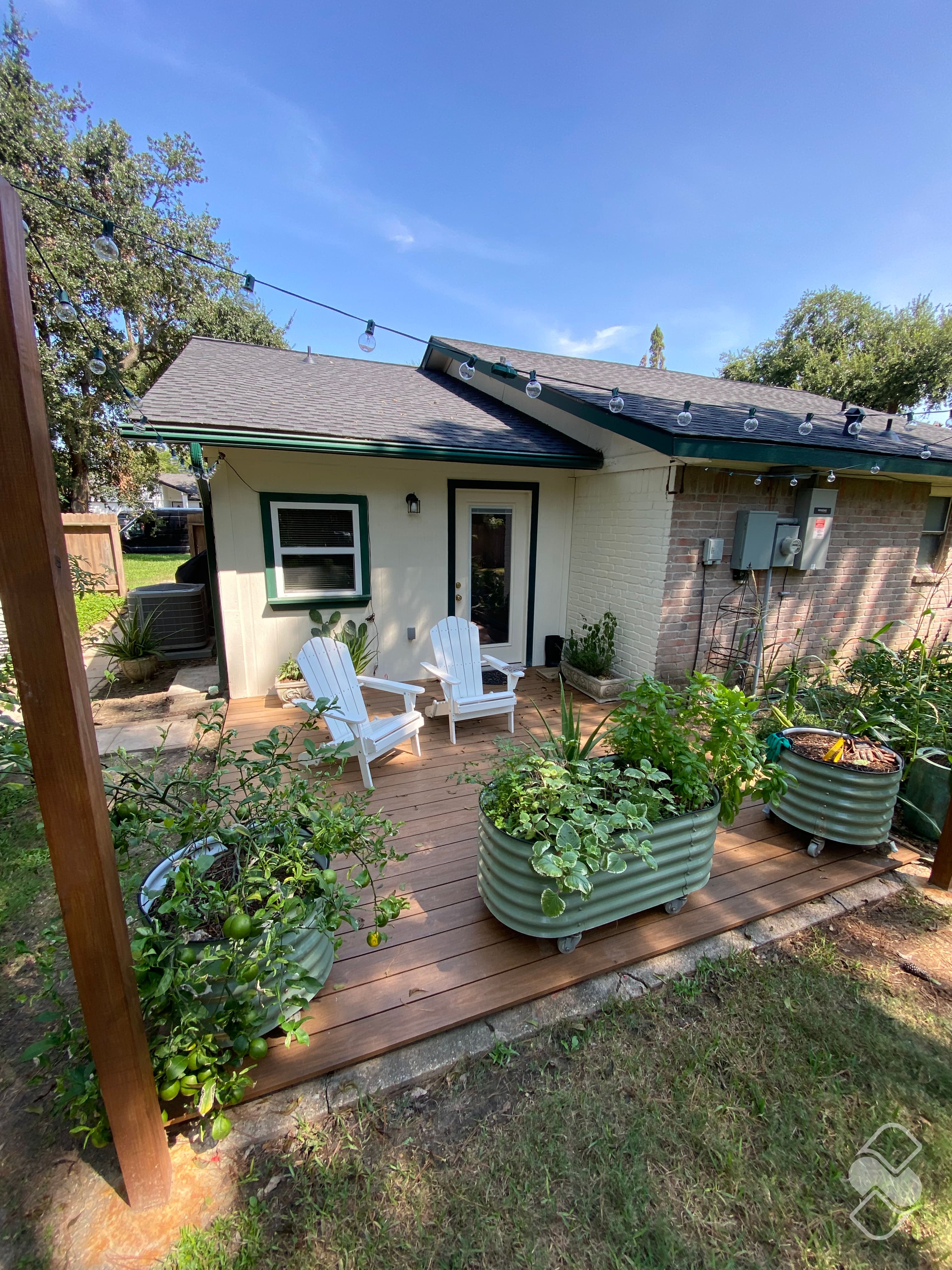
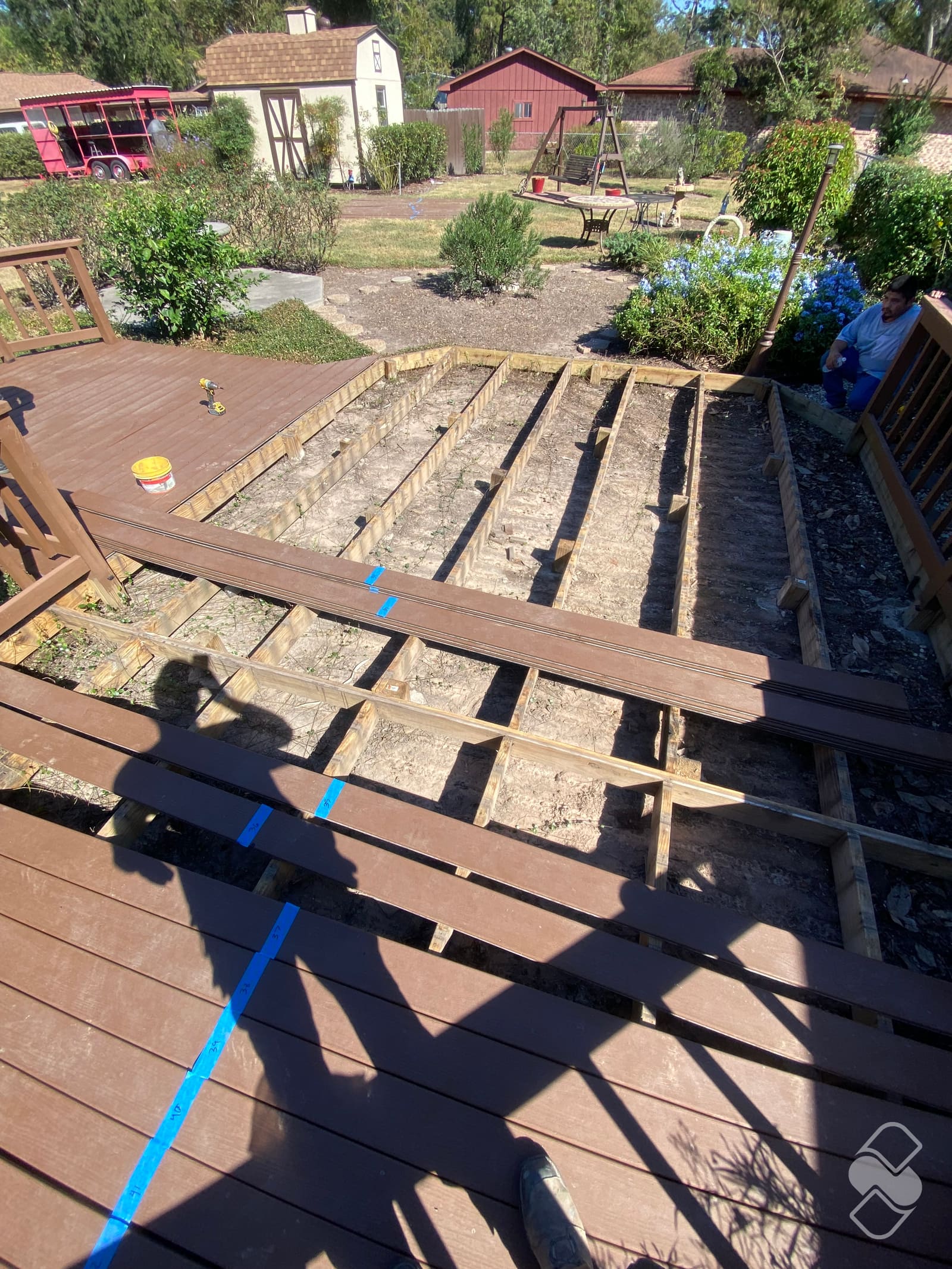
On one large composite deck we rebuilt in Greater Houston, the boards were still good. What was under them was not. So we took every board up, labeled each one so it could go back where it came from, rebuilt the structure and all of the supports underneath, and put the original boards back on with new spacers and hardware.
That job is one of five on our decks, built and rebuilt page, and no two of them got the same answer.
If you are standing on a soft deck board and wondering whether you need a repair or a whole new deck, this is how we decide, and what to ask for.
Deck repair or replace: what do we check first?
In our experience, most decks fail from underneath. The boards you walk on get the blame, but it is the framing, the supports and the way water moves under the deck that decide how long it lasts. So the surface is the last thing we judge, not the first.
This is the order we work in:
- Walk it. Bounce or soft spots underfoot, railings that move when you lean on them, fasteners backing out, boards cupping or going gray and splintery. These tell us where to look, not what the answer is.
- Look underneath. Posts, beams, joists, and the ledger board where a deck ties to the house. We are looking for rot, and the two places that tend to change the answer are the posts and that connection to the house.
- Check what it sits on. The footers and supports, and whether water has somewhere to go or sits under the frame.
- Then the boards and the hardware. Which boards are rotted or split, which are sound, and what shape the spacers, hangers and fasteners are in.
- Write it down. Repair or rebuild, itemized in writing, with photos of what we found.
The answer usually comes out of steps two and three. A soft board over a sound frame is a small job. A good-looking board over a failing frame is a bigger one.
When is replacing deck boards enough?
When the frame under them is worth keeping. Two of the five decks landed here, one a small job and one a bigger one.
The smaller job was at a house about to be listed. Cost mattered and a new deck made no sense. We cut out only the rotted boards, replaced them back to the nearest supports, and finished the new boards in a textured paint to match the rest of the deck.
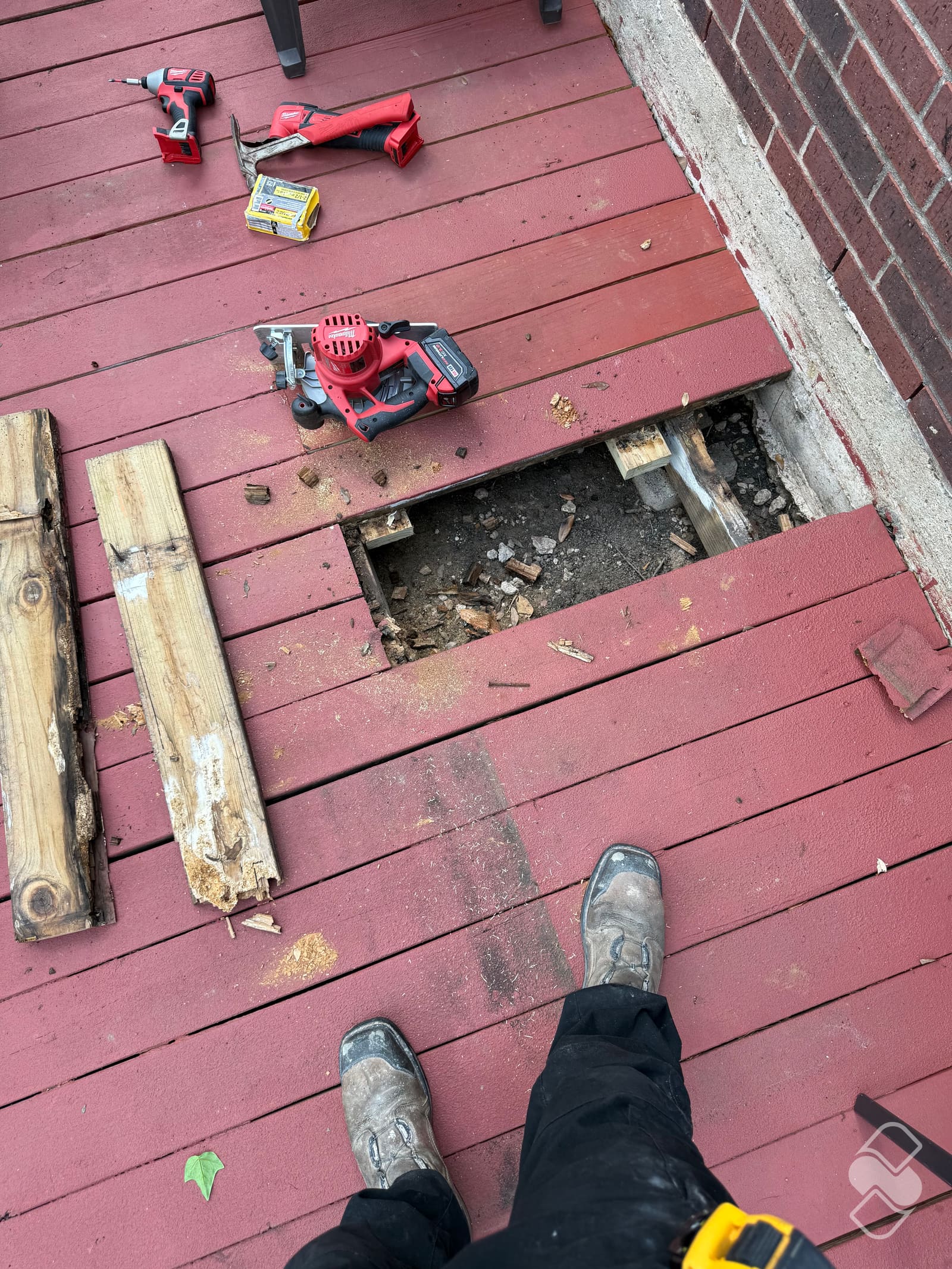
"Back to the nearest supports" is the part to notice. Cutting back to framing gives both ends of a new board something solid to land on.
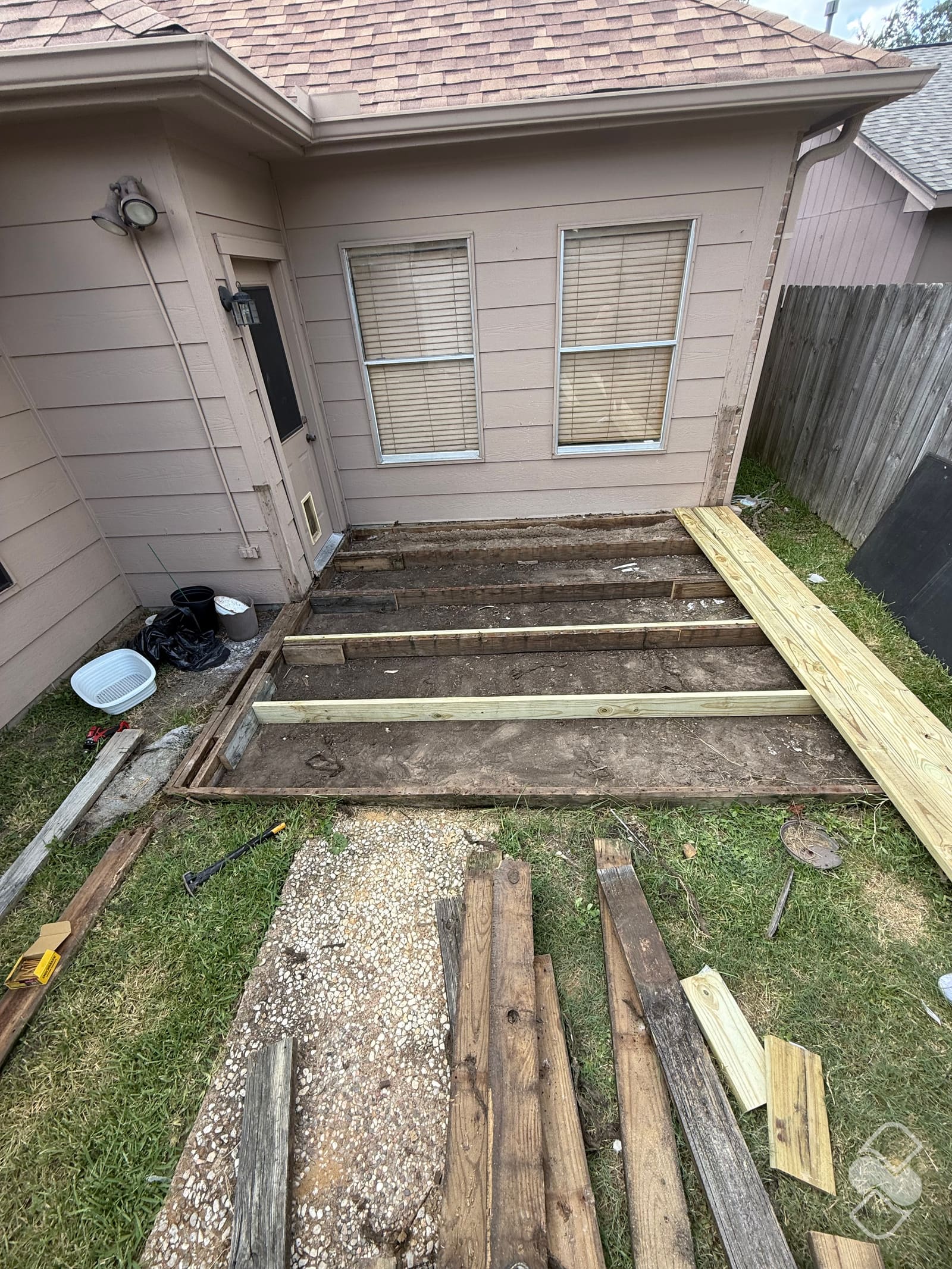
The bigger job was the back deck on a flooded family home in Katy we got ready to sell. Cyndi had called us about her mother's house, and the deck was one piece of a whole-house job. It was rotten on top, but the frame underneath was worth keeping. We stripped it to the joists, added supports beneath, and laid a new deck on the existing footprint without digging new footers. That kept the cost where the family needed it.
When to replace a deck instead of repairing it
When the frame is the problem. If the posts or the connection to the house are compromised, partial repairs tend to be good money after bad.
What usually points us toward the frame and away from a board repair: bounce across a whole section instead of one soft board, rot in the posts or where the deck meets the house, and fasteners backing out board after board.
The large composite deck at the top of this guide was a frame problem. What makes it worth a second look is that "rebuild" did not mean "throw everything away". The composite boards were still good, so we rebuilt the structure under them and put the same boards back. The homeowner kept the deck they had already paid for, on a new frame.
So when someone tells you a deck needs replacing, the useful follow-up is: which part? It is often the part you do not see, and sometimes the part you do see can be saved.
Can you build a composite deck over a concrete patio?
We have. On one of the five jobs, in Jersey Village, the back patio was a cracked concrete slab. We washed it down, fastened sleepers across it, and laid composite decking over the top. The homeowner got a warm, even deck without tearing out the concrete.
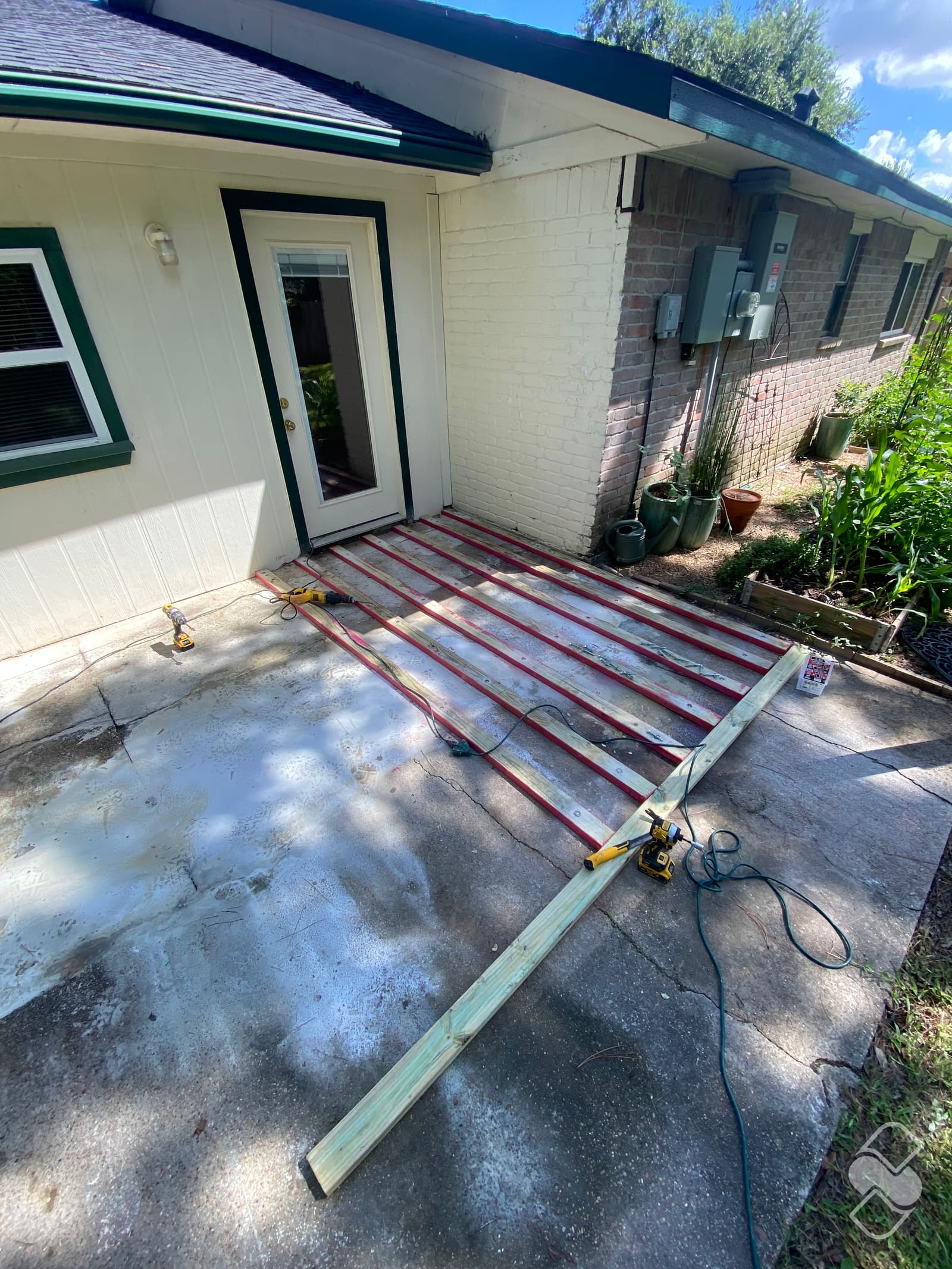
Posts went up around the deck the same day the decking was finished. A month later they were stained and strung with lights, and the deck had chairs and planters on it.
A cracked slab did not rule this one out. We still look at every slab in person before we recommend this route, because the sleepers have to fasten to it.
What does building a new deck from bare dirt involve?
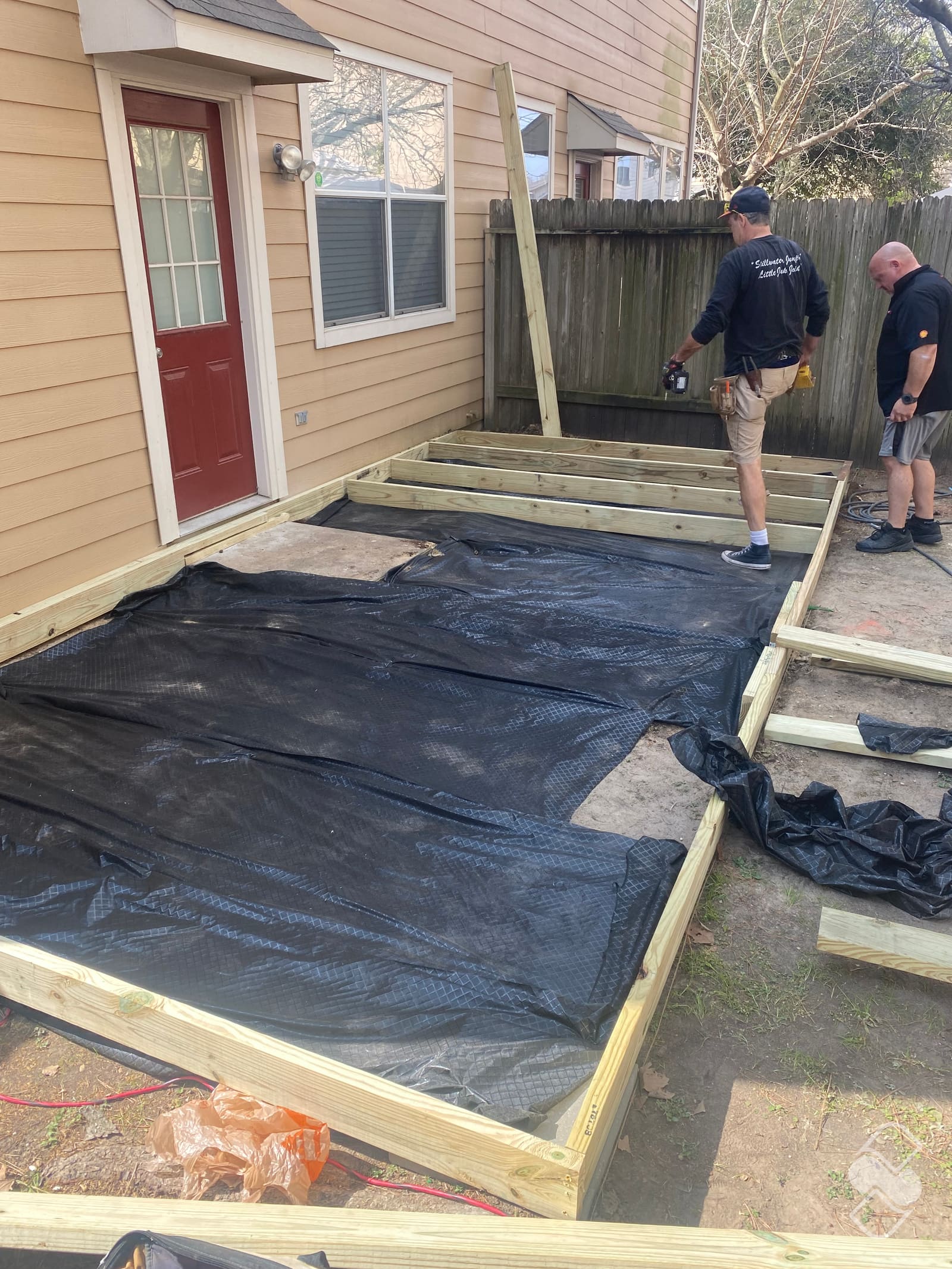
The other new build, in the Spring and Cypress area, started as dirt beside the back door. Every layer had to be made, in this order:
- A moisture barrier laid over the ground.
- Every footer dug, then poured in concrete.
- The frame built in treated pine.
- Treated pine decking to match.
Everything you see on that deck is new. The first two steps are the ones that disappear once the boards are on, so if you are comparing deck builders around Houston for a new ground-level deck, ask each one what goes under it.
Composite or treated pine deck boards?
We build with both, and both show up among the five decks. This is how we put the trade to homeowners:
- Composite costs more up front and ends the staining cycle.
- Treated pine costs less and looks natural, but it wants maintenance in our sun and humidity.
We price both and let the numbers decide. And as the rebuilt deck showed, a composite board can outlast the frame it was first fastened to.
What do finishing and upkeep look like?
The board repair above was finished in paint to match. We also offer clean, stain and seal options to protect a repair.
If the deck is painted, the rule from our exterior painting guide applies here too: repairs come first, because paint over rot tends to fail fast and hide the problem while it spreads.
For upkeep, our seasonal maintenance checklist puts decks on the fall list: inspect them after a long, hot summer, using the walk in step one above. And because the way water moves under a deck helps decide how long it lasts, the grading and drainage habits in our guide to protecting a home from Houston humidity and storms apply to the ground around a deck too.
What moves the price
On our jobs, a deck price usually depends more on what is under the boards than on the boards. These are the things that move it:
- Structural condition. Surface repairs are the small end. Framing repairs are real work.
- What can be kept. When the frame is sound, a new top usually comes in at a fraction of a rebuild. When the boards are sound, putting them back saves the material you already paid for.
- Footers. Reusing an existing footprint avoids digging new ones. Building from bare dirt means every footer is dug and poured.
- Size, height and railing footage. More deck is more lumber and more labor.
- Stairs and built-ins. They take more fitting time than open decking.
What to ask whoever quotes it
- Did you look underneath, and can I see photos of what you found?
- Is this a board repair, a new top on the existing frame, or a rebuild, and why that one?
- Is the scope itemized in writing, and what happens to the price if you find more rot once the boards are up?
- If you are replacing boards, where do the cuts stop? Ask for them to run back to the nearest supports.
- Are the footers and supports staying, being added to, or being dug and poured new?
- For a new ground-level deck: what goes on the ground before the frame, and is every footer dug and poured in concrete?
- Which boards and hardware are being reused, and which are new?
- What is the finish, and is it in the price: paint to match, stain and seal, or left ready for paint?
If you already have a deck quote and want another set of eyes on it, that is what our second opinion is for. SOS stands for Second Opinion Service.
Questions we get about this
Should I repair or replace my deck?
If the frame is sound, replacing the rotted boards or putting a new top on the frame is usually enough. If the posts or the connection to the house are compromised, a rebuild is usually the right call. We look underneath before we recommend anything and tell you which, with photos of what we find.
Do you repair and build decks in Katy and Cypress?
Yes. Of the five decks in this guide, the new top on a sound frame was in Katy and the deck built from bare dirt was in the Spring and Cypress area. SOS Remodels & Contracting handles deck repair, deck replacement, deck remodeling and new decks across Katy, Cypress and Greater Houston, from a few replaced boards to a ground-level deck built on poured footers.
A soft board over a sound frame is a small job. A good-looking board over a failing frame is a bigger one.
Done right is cheaper than done twice, and on a deck that sometimes means a full rebuild and sometimes means knowing a repair is all it needs. An owner is involved in every project, and our deck repair page lists what a repair includes. If you have a soft board, a bouncy section or a patio slab you are tired of looking at in Katy, Cypress or anywhere in Greater Houston, call or text (877) 411-4007 and we will look underneath before we recommend anything.