
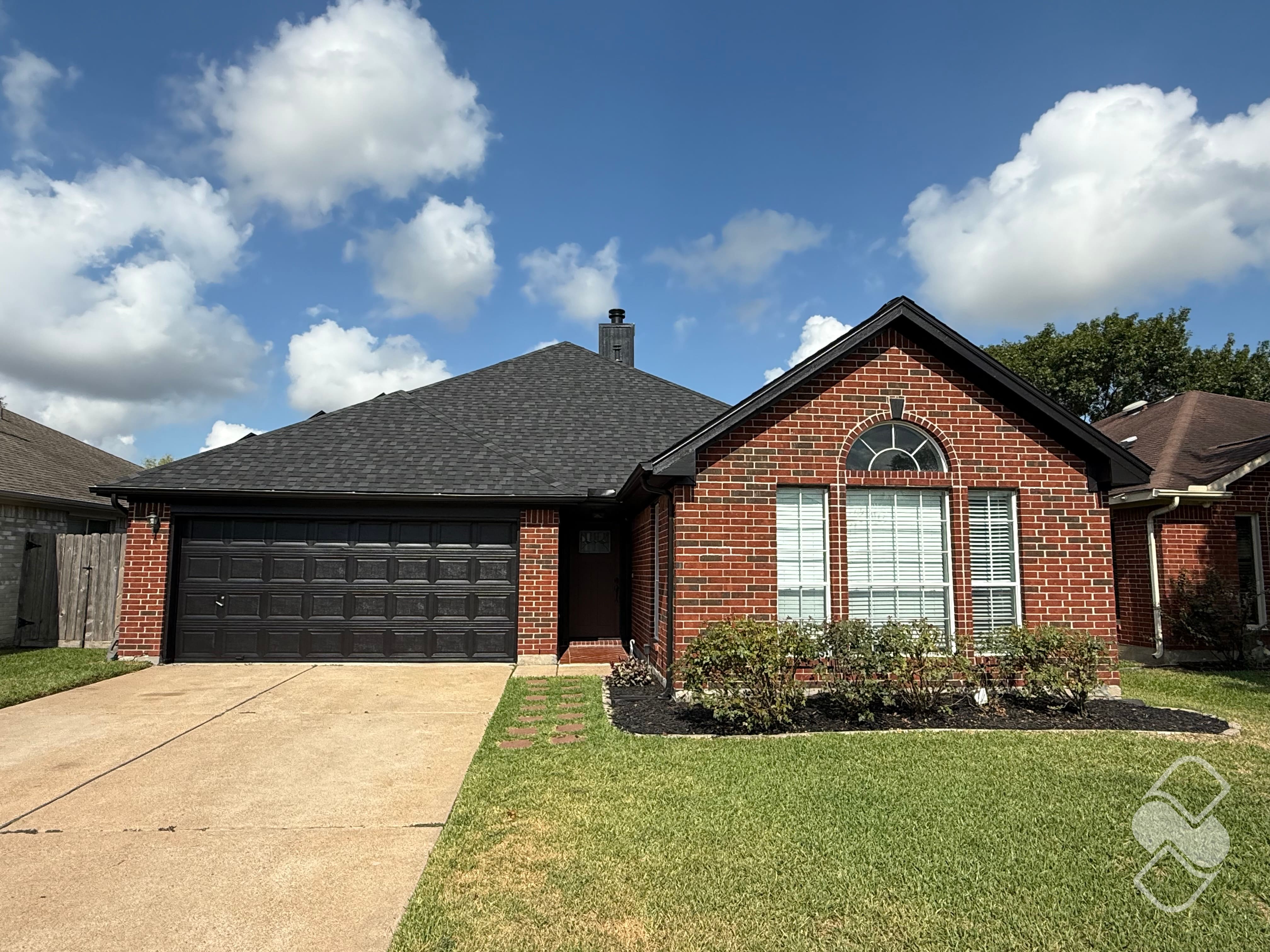
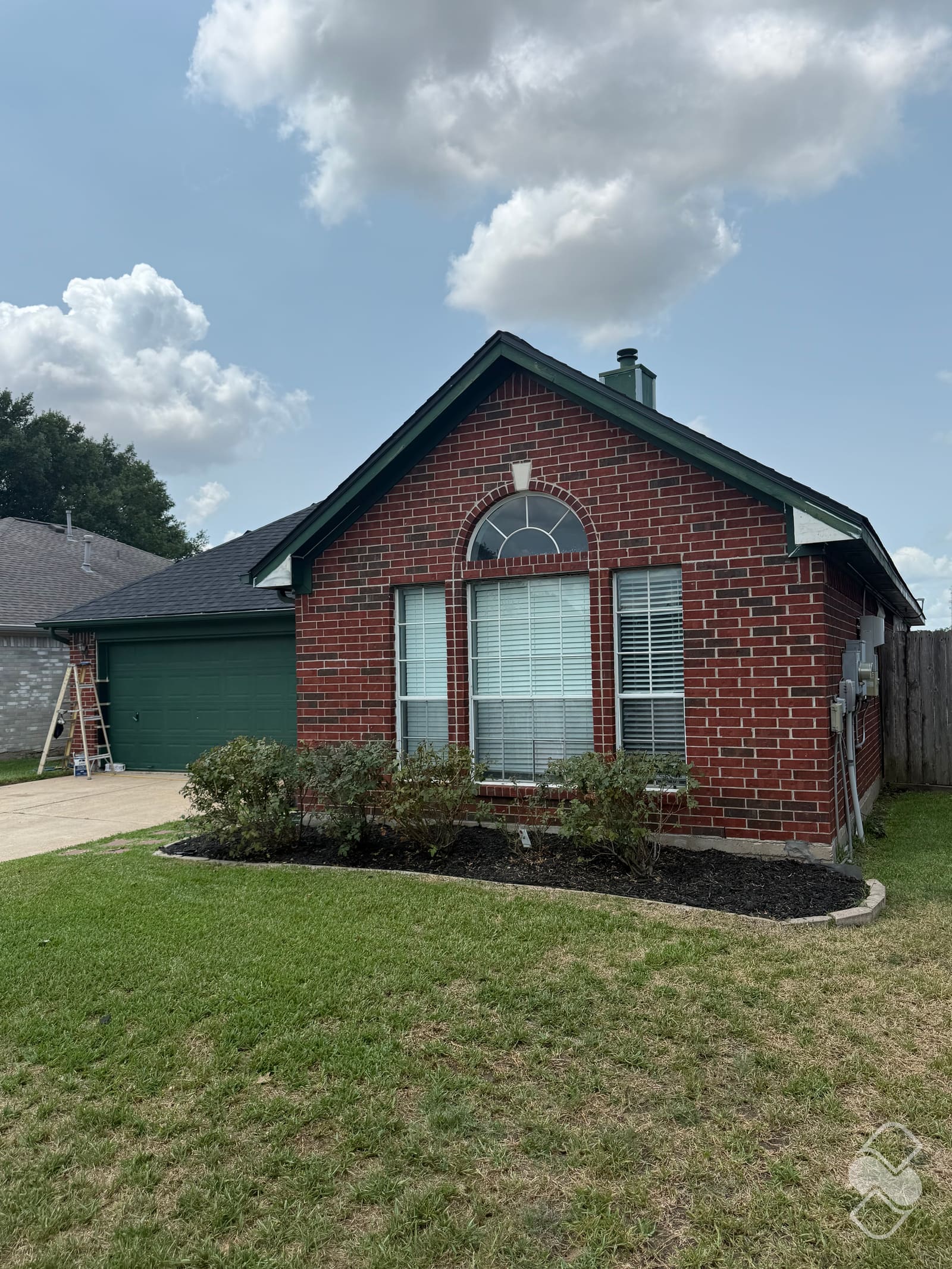
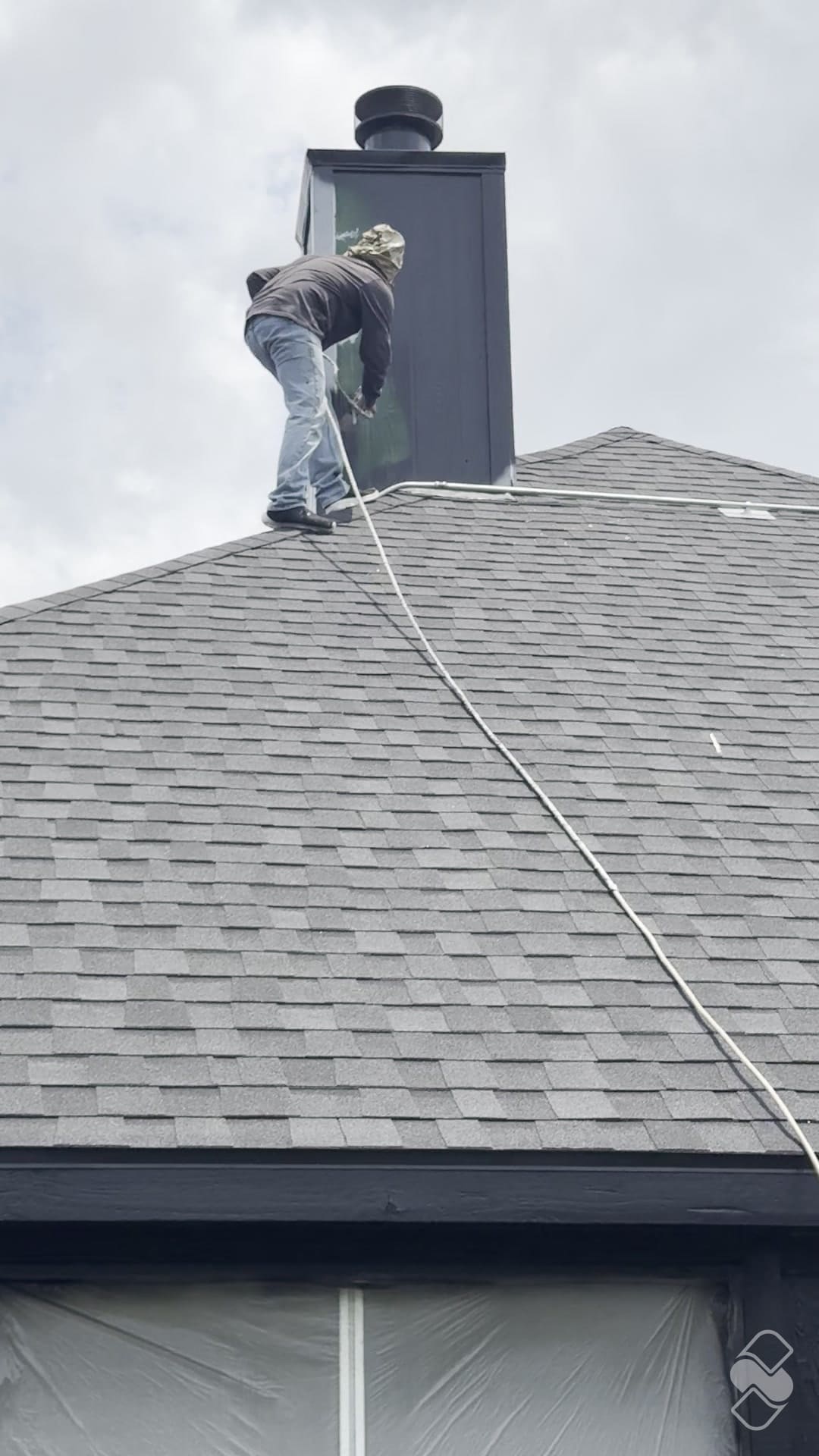
Britney’s house in Old Katy is a classic brick ranch, and when she called us in August the brick was fine. Everything around it was the problem: green siding in the gables, green trim, a green garage door and front door, all faded unevenly, so the house read as tired from the street. Three days later the same house, with the same brick, looked like a different property. We did not touch the brick. We washed, repaired, taped and painted everything else a near black called Caviar.
That job is a good way to explain exterior painting around Houston, because it covers the three questions we get on almost every driveway: when should we do it, what does a real repaint include, and do we have to paint the brick. Here is how we answer them.
When is the best time to paint a house exterior in Houston?
Most of the year, if you plan around the weather. Paint wants a dry surface, a mild day and a dry night after it, and the Houston calendar gives you those in stretches rather than seasons. In our experience the easiest windows are roughly October through early December and March through May: milder days, lower humidity, fewer afternoon storms. Summer is workable, and plenty of our exterior jobs run in it, but it takes more planning. We start early, follow the shade around the house, and keep paint off a wall that is too hot to rest a hand on, because paint that dries too fast tends not to level or bond the way it should.
Humidity matters as much as heat here. Heavy air slows curing, and dew settling on a coat that went on late in the day can leave marks you see the next morning. So on a sticky week we paint earlier and stop earlier. If the forecast turns, we stop. A rain delay costs a day. Paint that went on wet can cost the whole job.
One more timing note: the wash is usually its own day. The house needs to dry before anything goes on it, and that drying day is part of the schedule, not a gap in it.
What a real exterior repaint includes
The order matters more than the brand on the can. Here is the order we work in, and why each step protects the one after it.
- Walk the house and write it down. We look for paint that is peeling or cracking, a chalky film that rubs off on your hand, caulk lines split at the trim and corner boards, and gray, dried-out wood showing through, which is the last warning before rot. We note what each surface is, because Hardie, wood, brick and a metal garage door each prep differently. Every finding goes in the written scope as a repair or a skip, so you can see what you are paying for before we start.
- Wash. We pressure wash the whole house first to take off the chalk, mildew and dust. Paint over chalk tends to let go early, and good paint does not fix a dirty wall underneath it.
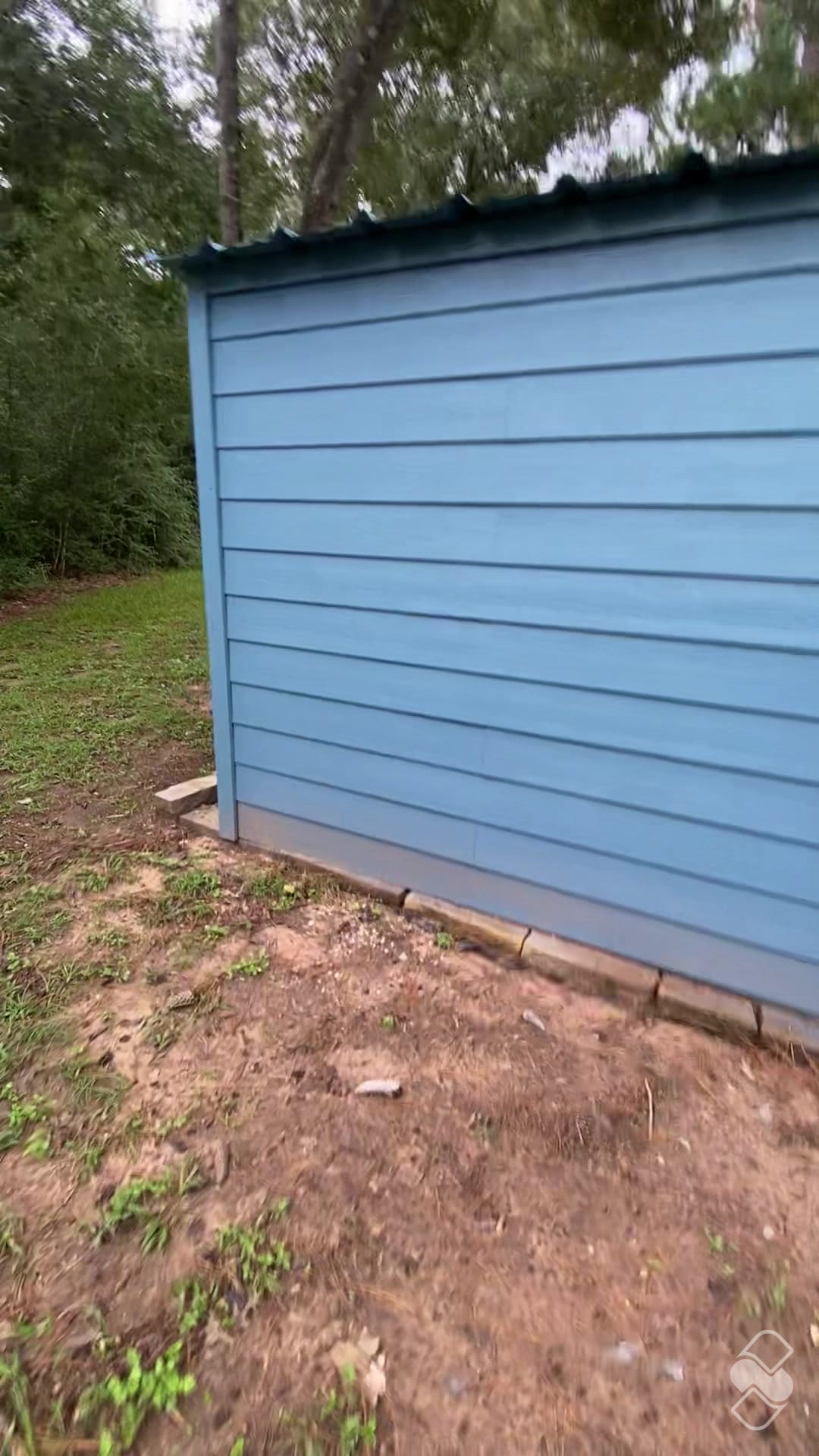
- Repairs before paint. Paint over rot fails fast and hides the problem while it spreads, so repairs come first. On Britney’s house that meant siding repairs on the chimney before any paint went on. On a smaller job it was a water damaged window sill that we filled, sanded smooth and painted along with its apron. New Hardie goes up primed and wants paint on it: the siding on Allan’s generator shed in Magnolia went up primed, then the whole shed was sprayed the same blue as his house.
- Scrape, sand, spot-prime, caulk. Loose paint comes off, bare spots get primer so the new coat has something to hold, and the joints at trim, corner boards and window casings get fresh caulk. Not every gap gets caulk. The bottom edge of lap siding is usually left open on purpose so the wall can dry out.
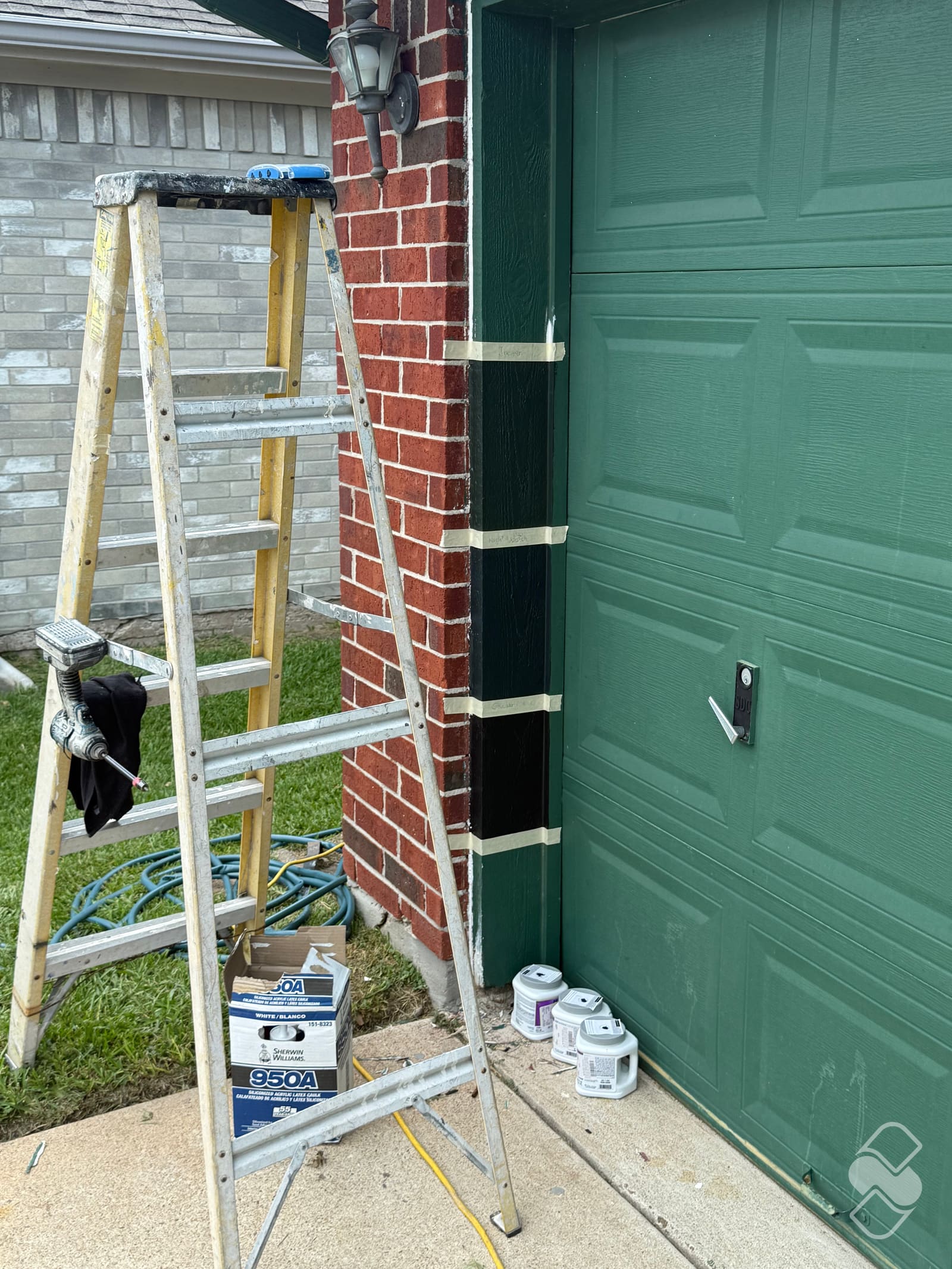
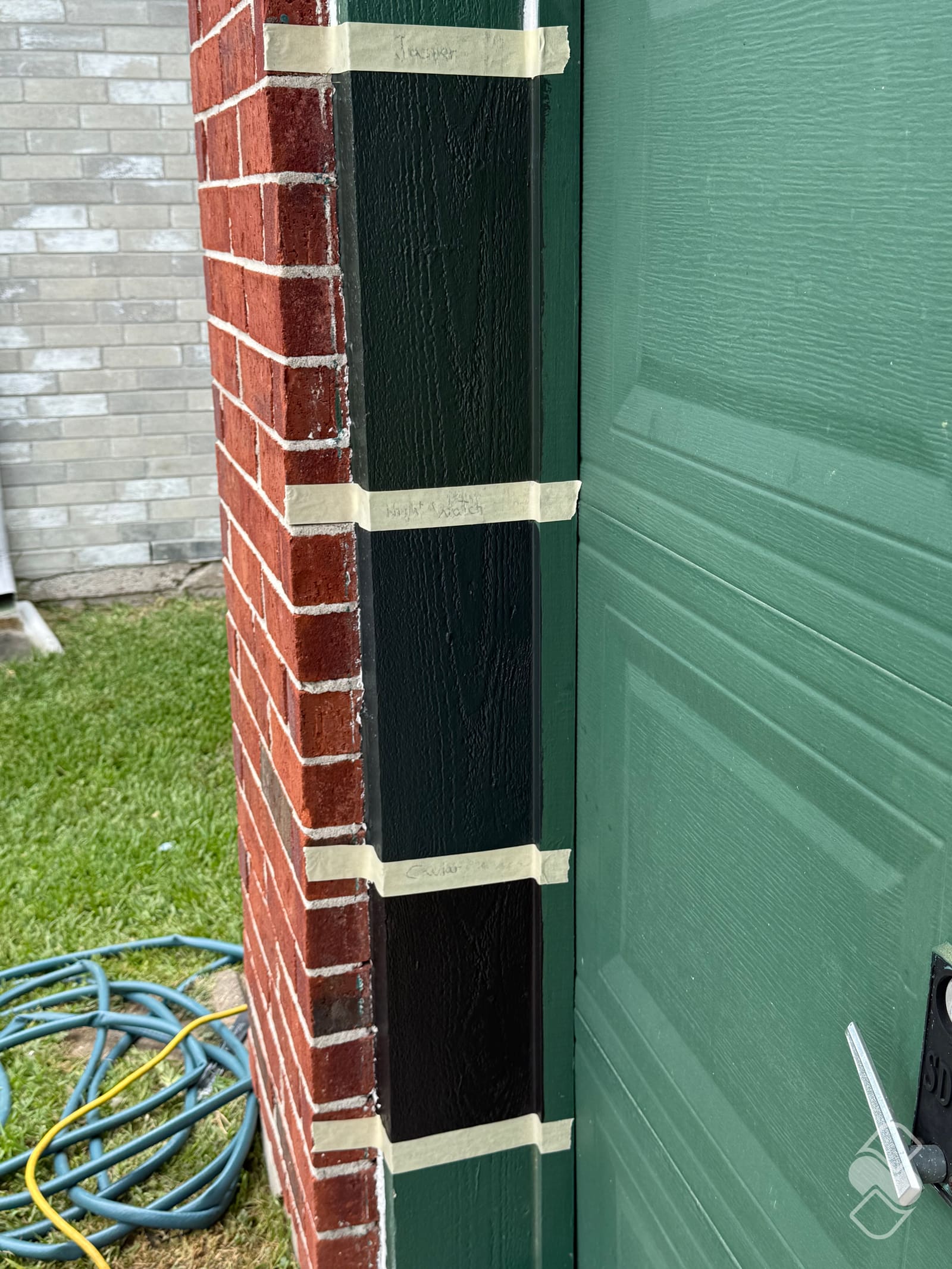
- Mask what is not getting painted. Windows, light fixtures, the AC unit, the plants against the house, and on a brick home, the brick itself. On Britney’s house the garage door, the front door and every run of trim were taped off from the brick, because a repaint on a brick house lives or dies on the line where paint meets mortar.
- Paint, in the right conditions. Big open areas like gables and siding are usually sprayed and worked in; trim and the edges against brick are cut in by hand. A big color change, like green to near black, usually wants two coats to cover evenly. Britney’s chimney was sprayed from the roof after its repairs, and the windows stayed masked until the back of the house was done.
- Walk it with you. We circle the house together and touch up anything that is not right before we call it finished.
Should you paint the brick?
Painted brick is everywhere right now, and we get asked about it on many of the brick houses we walk. Our honest read: if the brick is sound, paint everything else first and live with it for a season. On Britney’s house the gables, fascia, trim, garage door, front door, chimney and the back of the house all went one dark color, and the brick became the star of the house instead of the backdrop to faded green. A lot of people stop there.
A few reasons we say that. Paint on brick is close to a one way decision; getting back to bare brick later is a big, messy job. Brick and mortar move moisture, and the wrong coating can trap it where it does damage. And painted brick becomes a surface you maintain, where unpainted brick mostly asks to be washed. If you still want the look, it can be done well: the brick gets cleaned, the coating has to be rated for masonry so the wall can breathe, and we test a panel on the back of the house before anyone commits the front. We will tell you which way we would go if it were our house, and then it is your call.
Signs your exterior paint is done
- Peeling, cracking, or a chalky film that comes off on your hand.
- Caulk split or missing at the trim, corner boards and window casings.
- Gray, dried-out wood showing through the finish, especially on sills and the bottoms of trim and garage door jambs.
- Color that has faded unevenly, usually worst on the south and west faces, which take the hardest sun.
- Mildew that comes back soon after a wash.
With honest prep and quality coatings, an exterior paint job tends to last roughly 7 to 10 years here, with the sun-baked faces aging fastest. Skipped prep can cut that in half, which is why the wash, the repairs and the primer are not optional on our jobs.
How long it takes
Britney’s brick ranch took three days start to finish, including the wash, the chimney repairs and everything but the brick painted. Allan’s generator shed was four to five days from the first wall to the last coat, and that included framing, roofing and siding it, not just the paint. A full body and trim repaint on a two story sided house tends to run longer, because height and staging slow every step, and a house with a lot of repairs is carpentry first and painting second. Weather adds days, and we would rather add them than paint into a storm. We put the plan and the weather risk in writing before we start.
What moves the price
We do not quote a house we have not walked, but the relationships tend to hold. Prep condition moves the price more than square footage does: peeling, chalking and rot repair cost more than a sound surface that only needs a wash. Height and access matter; two story homes and steep gables take staging. Body and trim costs more than trim only, and every added color adds taping and time. The surface matters, because Hardie, wood, brick and metal each want different prep and coatings. And on a brick house, painting the trim, gables, garage and doors is usually a fraction of repainting a fully sided house, because the brick is most of the wall and it stays as it is. We measure it, write it down, and the scope says which of these your house has.
What to ask whoever quotes it
- Are you washing the house first, and is there a drying day between the wash and the paint?
- What are you doing about the rot and the split caulk, and is it written into the scope?
- Which product and how many coats, and does it match the surface it is going on?
- How will you protect the brick, the windows, the plants and the AC unit?
- What happens if it rains?
- Will you walk the house with me at the end?
Done right is cheaper than done twice, and on an exterior the weather makes sure of it. If the outside of your house in Katy, Cypress or anywhere in Greater Houston has started to look tired from the street, send us a photo from the driveway and we will tell you what we see. Start with our exterior painting page, and if the siding itself is the problem, read what a full re-side involves first.