
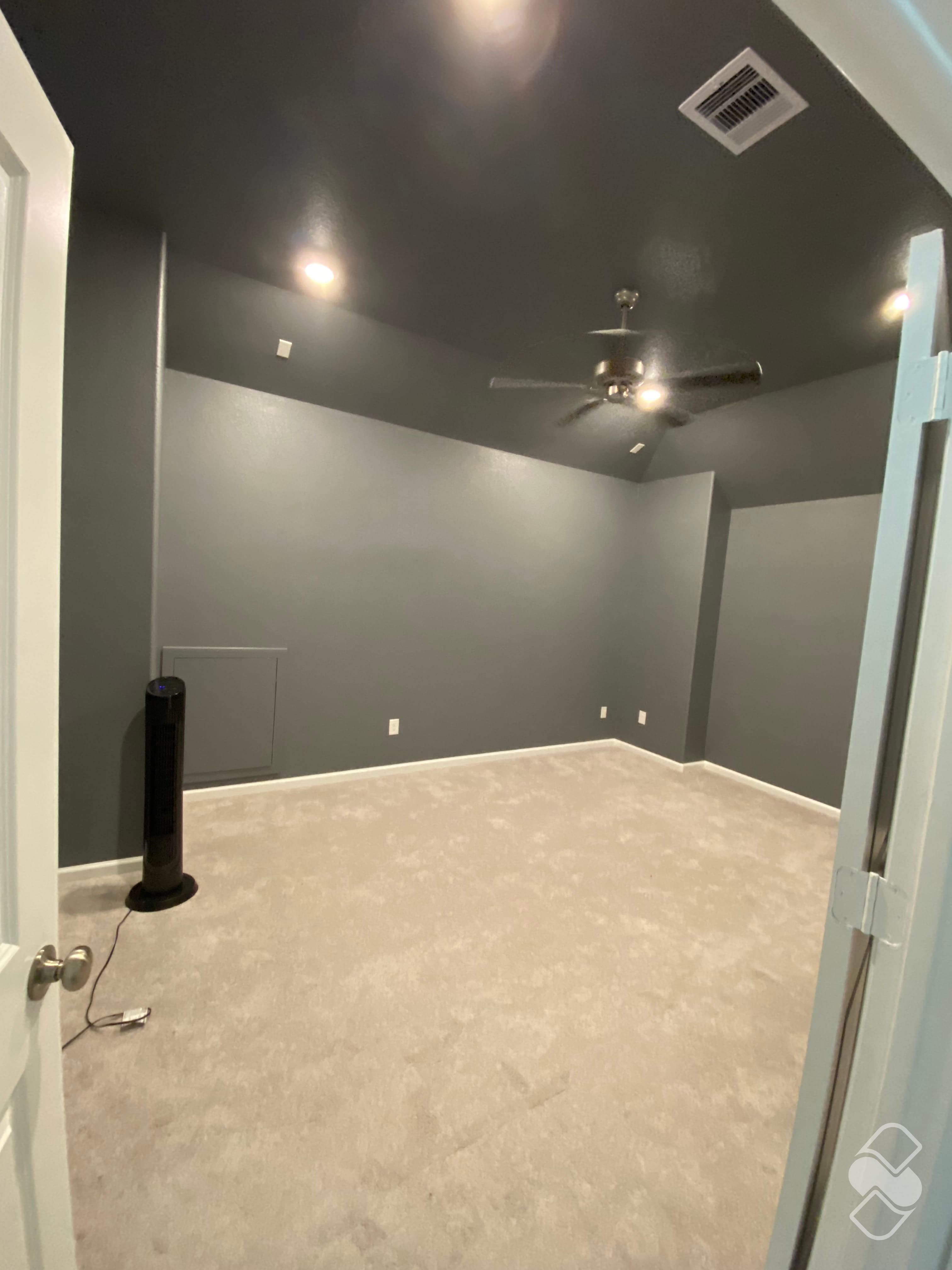
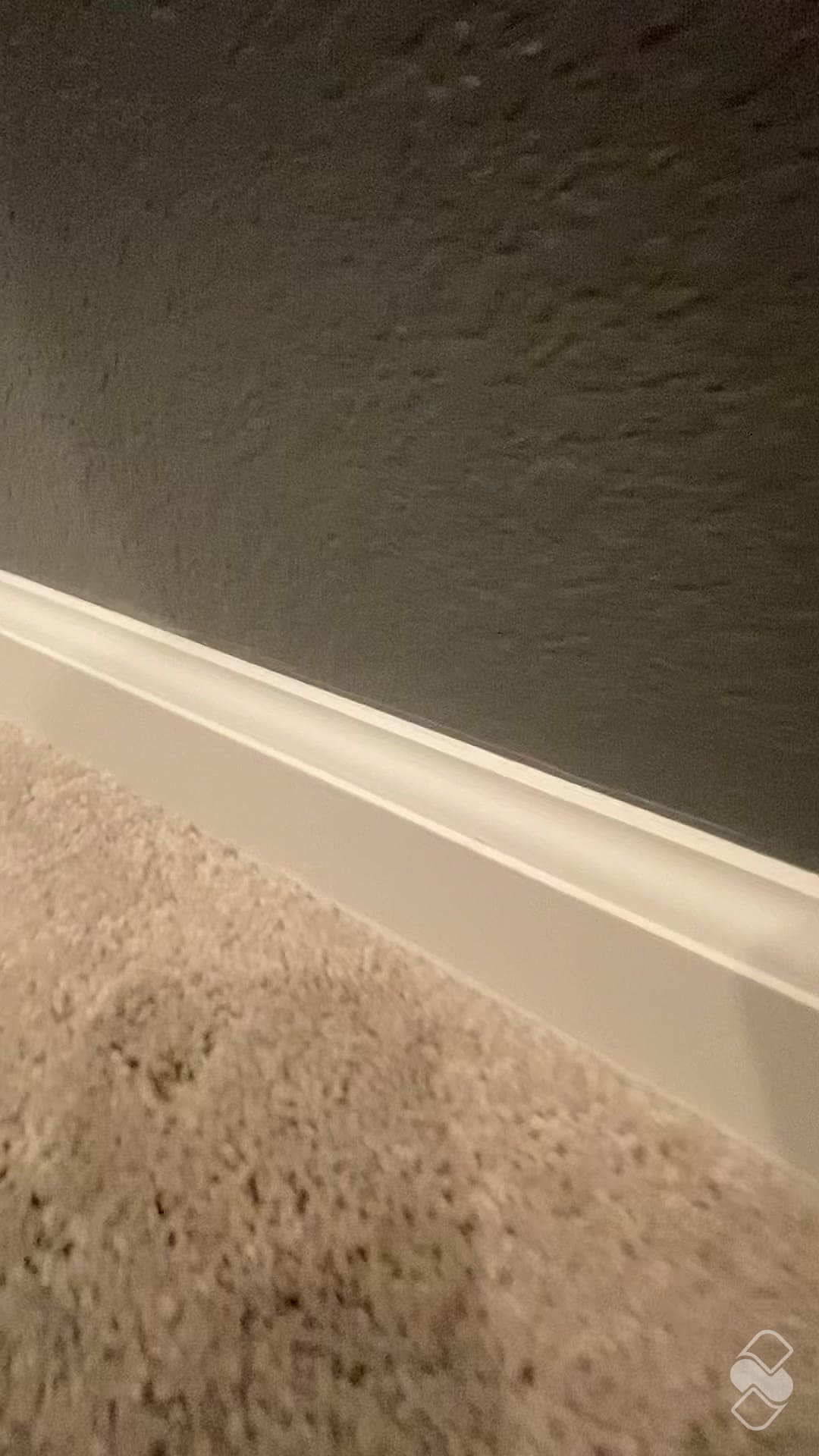
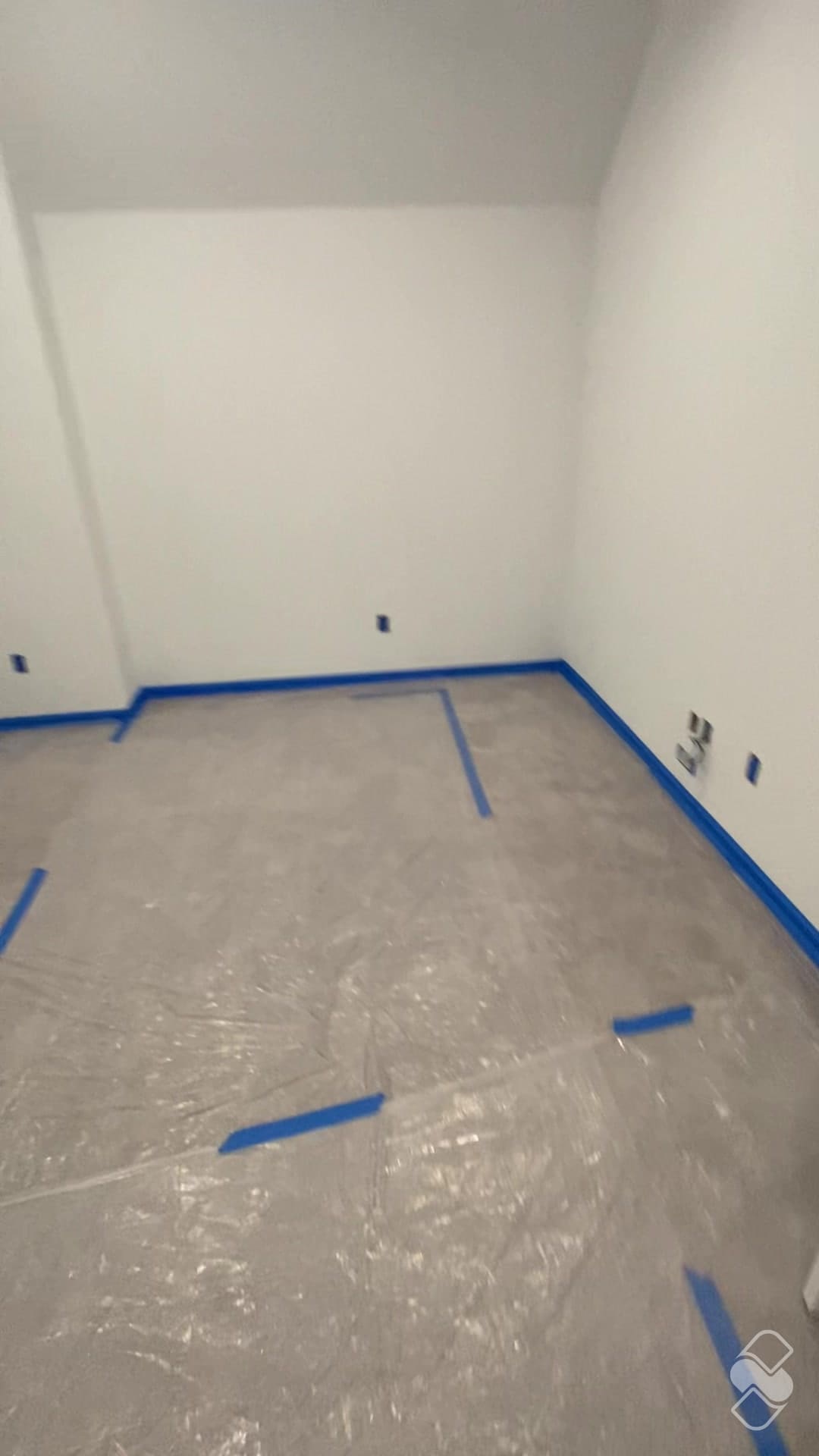
When we finished Zubin's game room in Sugar Land, we ran the camera along the cut lines on purpose. Every wall and the vaulted ceiling had gone from builder white to one deep gray, Sherwin-Williams Before the Storm, with the baseboards and doors left white. The line where that gray meets the white baseboard, straight and unbroken around the whole room, is the part of a paint job you are actually paying for. Anyone can roll the middle of a wall.
That is the test to run on your own paint job, interior or exterior, before the final invoice gets paid. You need a flashlight, twenty minutes, and the list below. If you are checking a whole remodel, read 7 signs your contractor is cutting corners. This one is only the last walk on a paint job.
What does a professional paint job look like?
From across the room, a good paint job looks like nothing happened except the color. Up close it holds: crisp edges, an even field, and trim that is still the trim.
In our experience the difference is almost all in the edges and the prep, which is why prep matters more than the brand on the can; we wrote up why prep is 80 percent of the job on its own. Zubin's room took as long to prep as to paint: carpet covered wall to wall in plastic, every cover plate pulled and the outlets and switches taped over, baseboards and casings taped off so the cut line would come out dead straight. We did not repaint the trim. It only had to stay clean. By that evening the plates were back on and the room looked like it had been built that color.
How to inspect a paint job: the flashlight walk, in order
Do this in daylight if you can, and bring a flashlight anyway. Hold the light nearly flat against the wall so the beam skims the surface. Painters call that a raking angle, and it shows what overhead light hides. Walk in this order. Outside, the same walk starts at the trim and the line where paint meets brick; the exterior painting guide has its own list of signs your exterior paint is done.
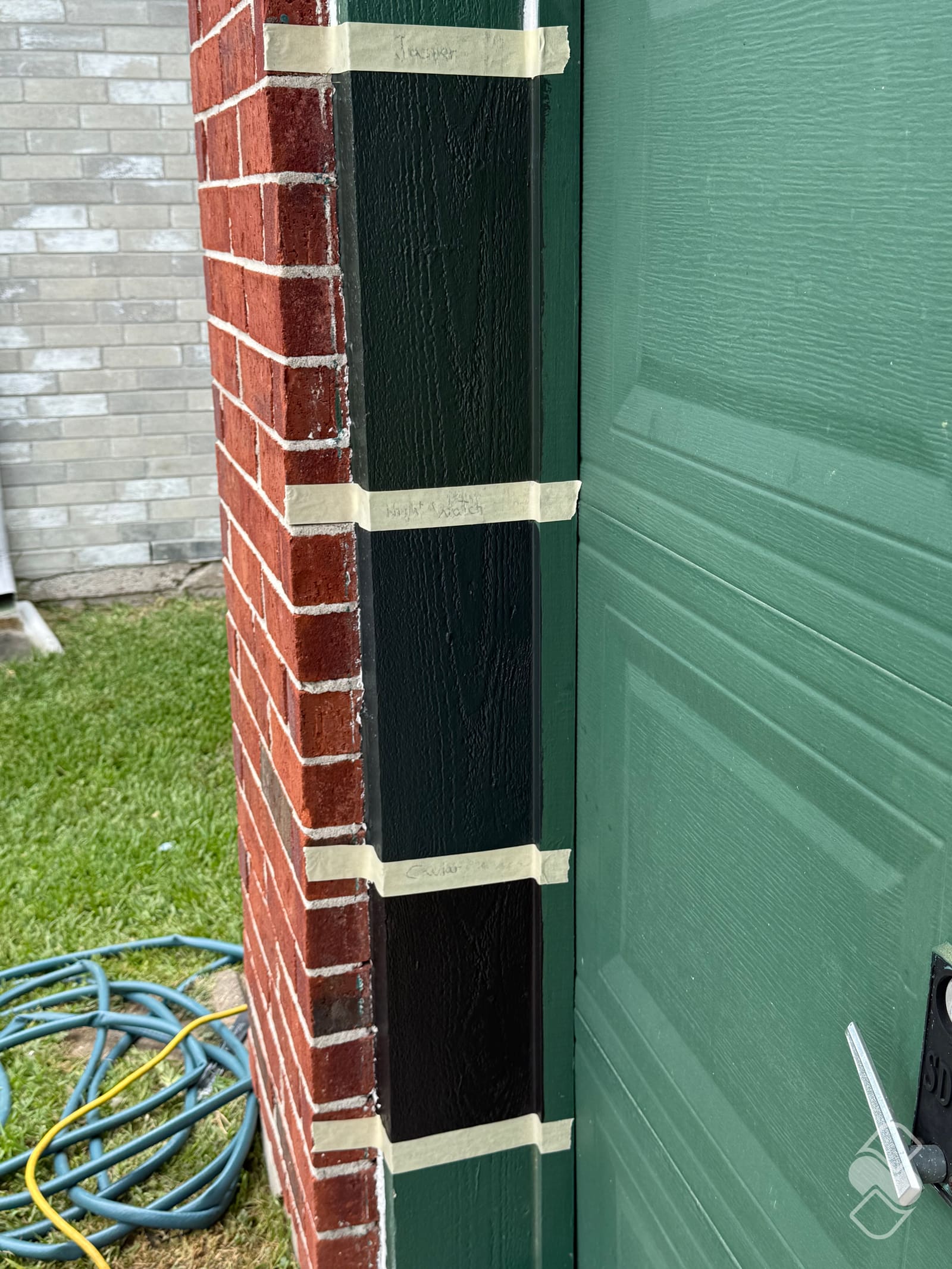
- Start at the cut lines. Follow the line where wall color meets trim, ceiling or another color: baseboards, casings, crown and the ceiling line. It should be straight and unbroken, with no wobble, no bleed under the tape and no stripe of the old color. Carry it around every inside corner. On a brick house the same line lives where paint meets mortar. On Britney's brick ranch in Old Katy, the garage door, the front door and every run of trim were taped off from the brick before any Caviar went on, because a repaint on a brick house lives or dies on that line.
- Rake the field. Flashlight flat to the wall. Look for thin patches where the old color ghosts through, roller stripes, lap marks where one pass dried before the next, and drips. A spot with no paint at all is called a holiday.
- Check the caulk at the trim. Where baseboard, casing or crown meets the wall, the caulk line should be smooth and continuous, not cracked, lumpy or missing in stretches. A gap painted over without caulk usually shows as a dark shadow line in raking light. On a bath in our handyman gallery the fix was to cut the crumbling caulk out of the baseboard line and recaulk before repainting, because paint over a gap is still a gap.
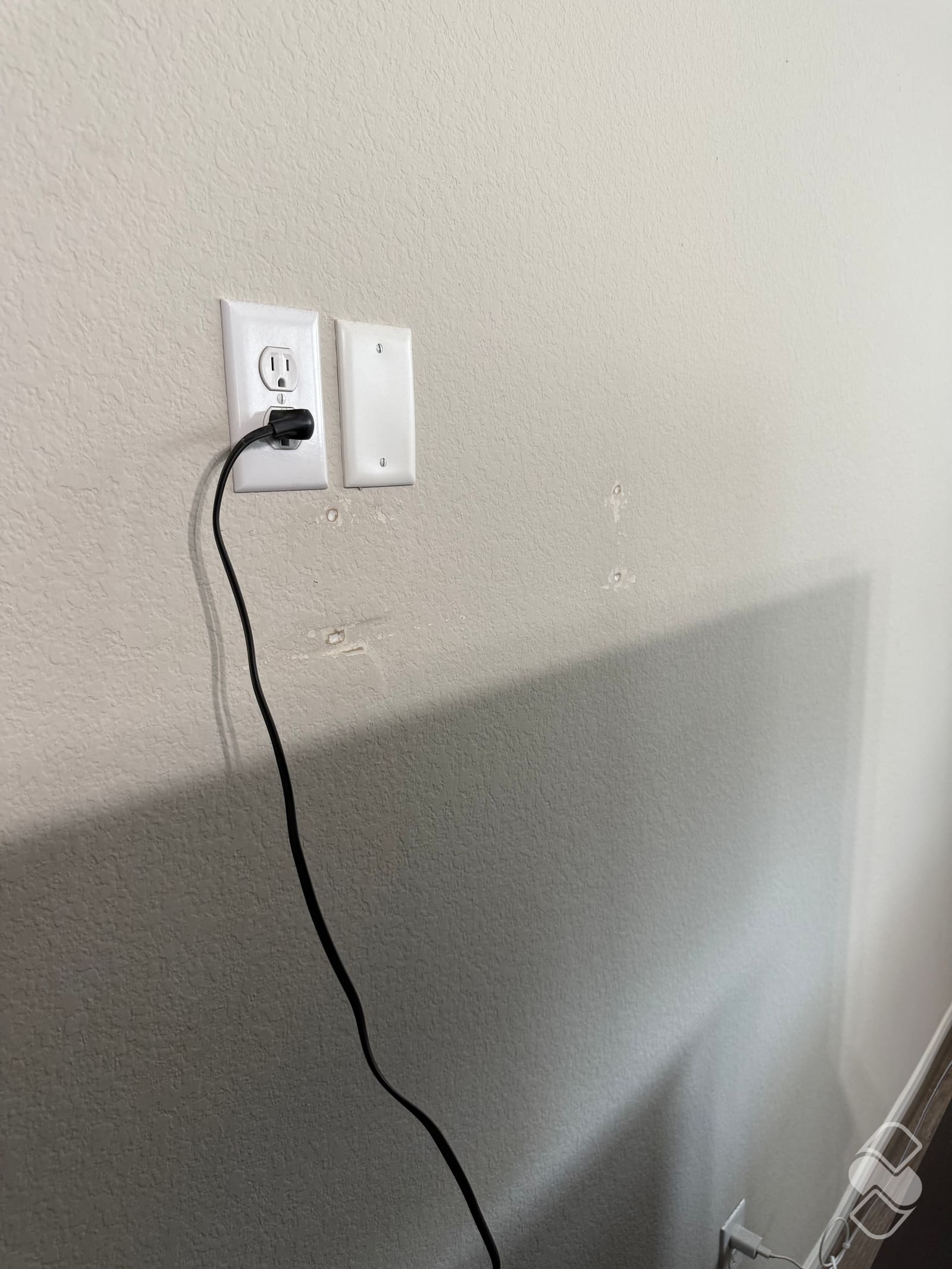
- Look at what was not supposed to get paint. Hinges, hardware, outlets, switch plates, smoke detectors, fixtures, glass and, outside, brick and stone. Paint on a hinge or a cover plate usually means the plates stayed on and the hardware was painted around.
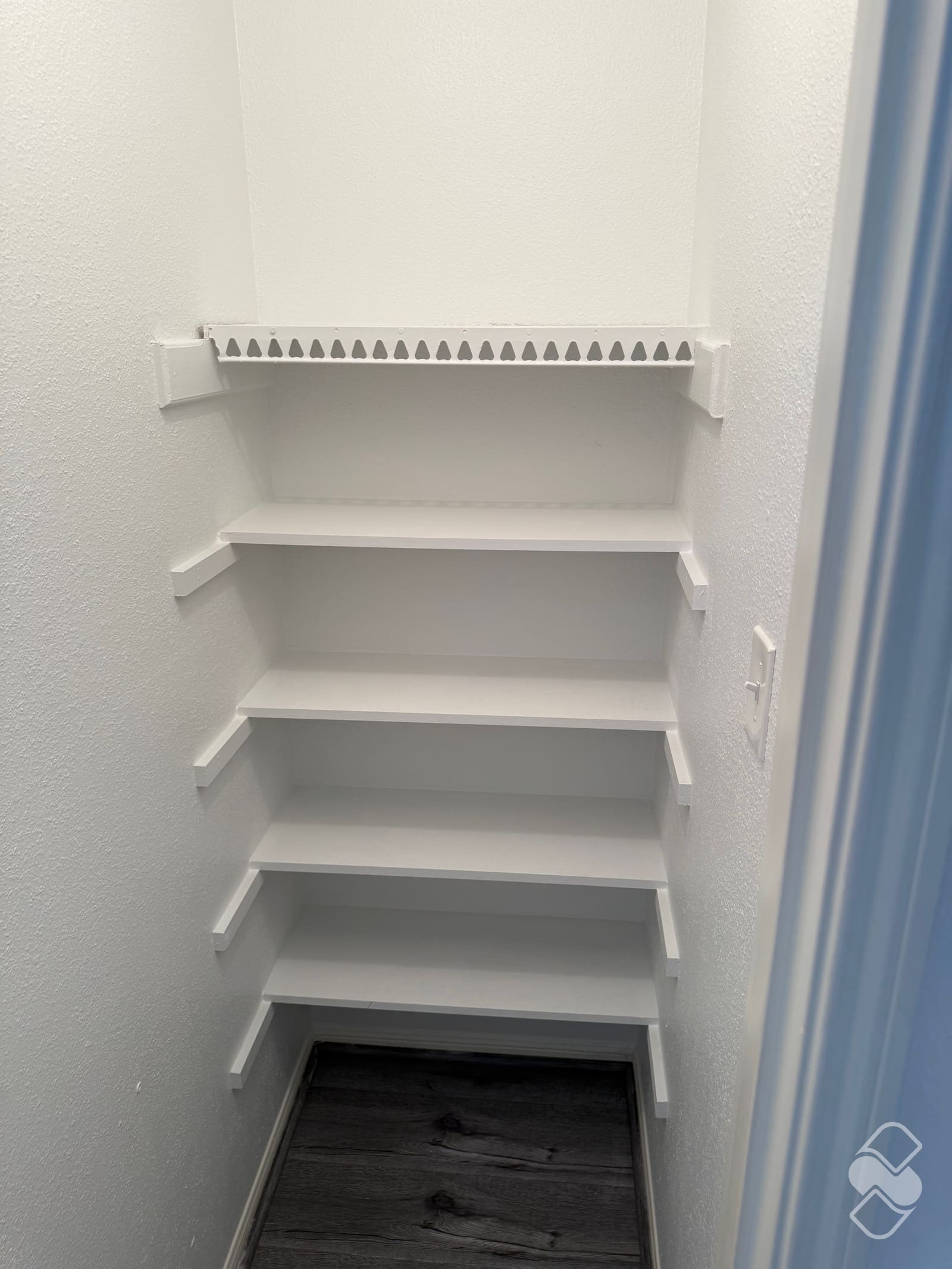
- Open the closets. If the scope says whole interior, that includes closets and shelves. At Mandana's townhome in Houston, the interior was painted, closets and pantry shelves included. A buyer opens every door. A fresh living room and an untouched closet usually means a scope that was quietly cut.
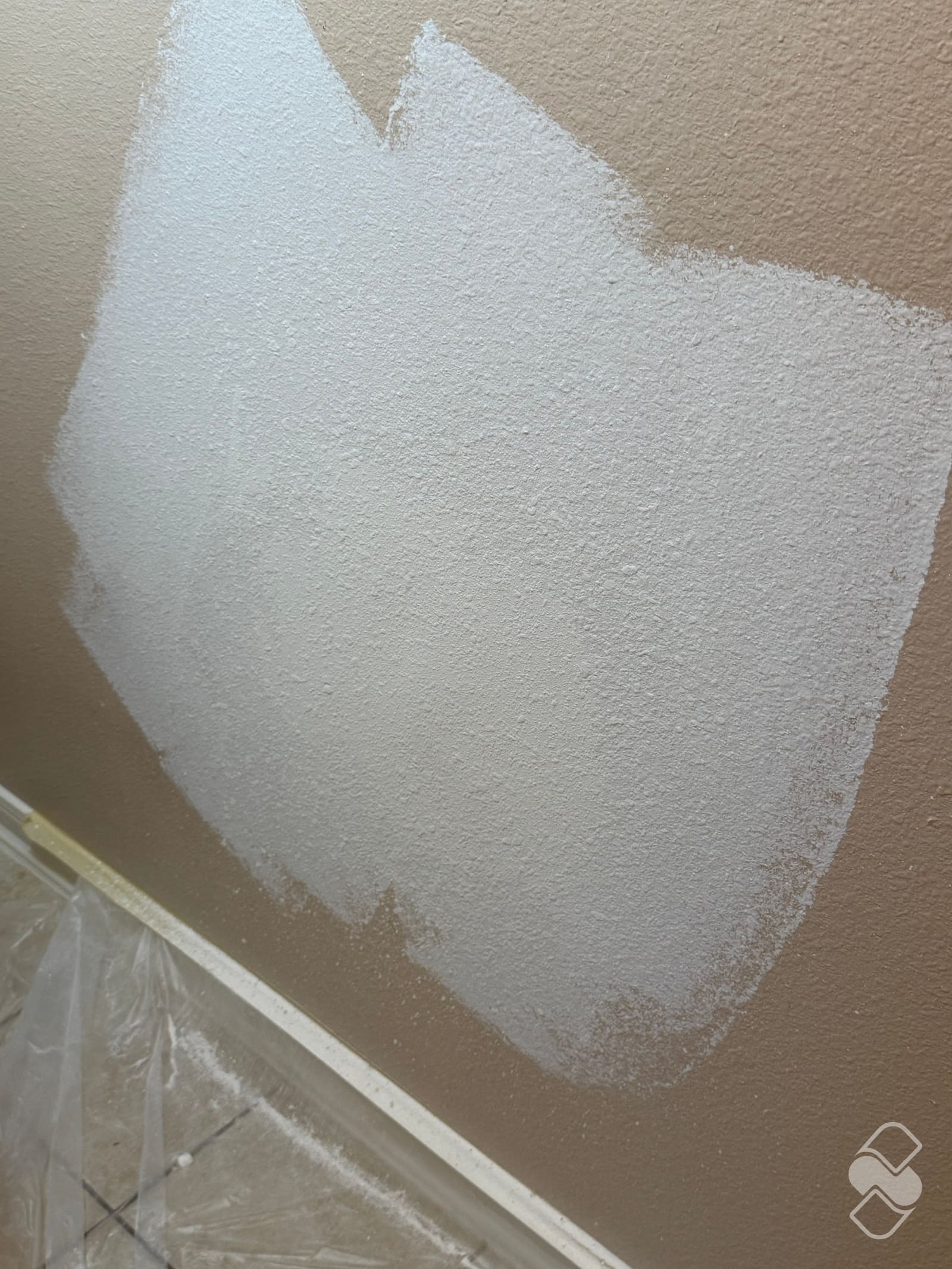
- Find the repairs. Any patched wall should match the texture around it. In that townhome, striped and floral wallpaper came down in two baths and a border came down in the pantry, and the walls underneath were retextured to match the rest of the home before paint. A smooth patch in a textured room, or a seam you can read from the doorway, usually means a prep step got skipped. More on our texture matching page.
- Doors and trim. If they were in the scope, look at them on edge: no brush ridges, no sags at the panel corners, no drips at the bottom rail, and doors that close without sticking.
- Sheen. Stand where light hits the wall at an angle and look for dull and shiny patches on the same wall. That flashing often means touch-up went on over a cured coat, or the wrong product went on a repair.
- Masking and cleanup. Tape and plastic gone, no residue on trim, no flakes or spatter on floors, furniture or fixtures. In Zubin's room the tape and plastic came up and the plates went back on the same evening.
- The touch-up walkthrough. The last step of a good paint job is a walk with you, in good light, and a painter who fixes what you find without an argument. On our interior jobs we check every wall in daylight with you before we call it done.
Signs of a bad paint job, in one list
Any one of these is worth a line on the punch list. Several together usually mean skipped prep.
- A wavy or bleeding line at the baseboard, casing or ceiling
- The old color showing through in raking light
- Roller stripes, lap marks, drips or bare holidays
- Cracked or missing caulk at the trim
- Paint on hinges, hardware, outlets, switch plates or glass
- Closets, shelves or the backs of doors left in the old color
- A smooth patch on a textured wall, or a wallpaper seam you can see
- Dull and shiny patches on the same wall
- Tape residue, spatter, or plastic still on the floor
Found a bad paint job? What you can do
Most of what a walk turns up is fixable, and a painter with a real process expects to fix some of it. The order matters.
Walk it before the final payment. Do the flashlight walk while the crew is still set up, or at least before the final invoice is paid. Fixing a cut line with the tape still in the truck is a small job. Coming back a month later to a furnished room is a bigger one.
Write a punch list. Room by room, in plain words: north wall of the dining room, thin patch left of the window; master closet shelves not painted; paint on both hinges of the hall bath door. Photograph each item. A written list keeps the conversation about the work instead of about memory.
Ask for reasonable touch-up. Thin spots, drips, a wobble in a cut line, paint on a hinge, a missed shelf: those are touch-up and should be handled. A wall that flashes, or texture that does not match, may need a recoat or the patch redone, which is still fair if it was in the scope. What is not fair is expecting a color you now dislike to be repainted for free, or holding the whole final payment over one item. And if the written scope said walls only, the trim is a new line item, not a defect.
Already paid? A second opinion walk tells you whether it is touch-up, a recoat, or a prep problem.
What moves the price on an interior paint job
In our experience, painting is priced by what has to happen before and around the color, more than by the color. The biggest mover is wall condition: nail pops, cracks, old wallpaper or water stains take more prep than clean walls, and prep is where the hours go. A big color change moves it next, because dark over light tends to want an extra coat and the cut lines have to be sharper the higher the contrast. Whether ceilings, trim, doors and closets are included moves it too, and so does ceiling height.
Outside, the movers are different, and the exterior painting guide covers that side. On every one of them we walk it, measure it and write it down before we give you a number.
What to ask whoever quotes it
Whether you are hiring a painting contractor in Katy or comparing house painters across Houston, the walk at the end goes better when these get asked at the start.
- Will you pull the cover plates and mask the outlets, or paint around them?
- How are you protecting the floors and furniture, and is that in the written scope?
- Does the price include closets, the inside of doors and the shelves, or walls only?
- If a wall needs patching, who matches the texture, and is that in the price?
- How many coats are you figuring for this color change, and is primer separate?
- Do you walk the job with me in daylight before the final invoice, and how do you handle the punch list?
A painter who answers those without hesitating usually has nothing to hide on the walk. One who gets vague about plates, closets or texture is usually telling you what the end of the job is going to look like.
Done right is cheaper than done twice. A wobbly cut line in Katy, Cypress or anywhere in Greater Houston is a small fix with the tape still in the truck, and something you look at every day once the final payment has cleared. If yours is coming up and you want a job that passes the flashlight test, ask us to come walk the rooms: start on the interior painting page, and read why prep is 80 percent of the job before you compare quotes.