
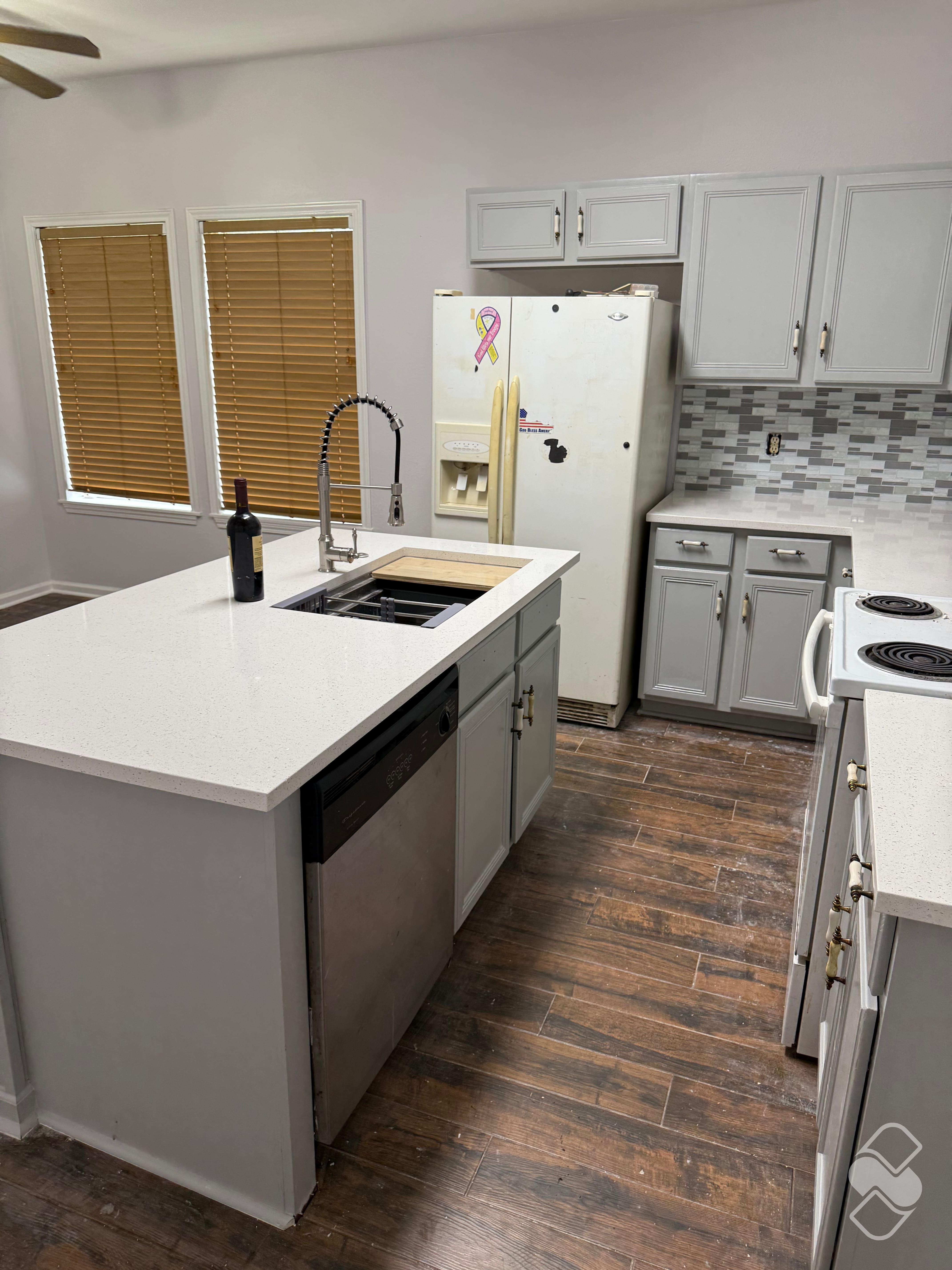
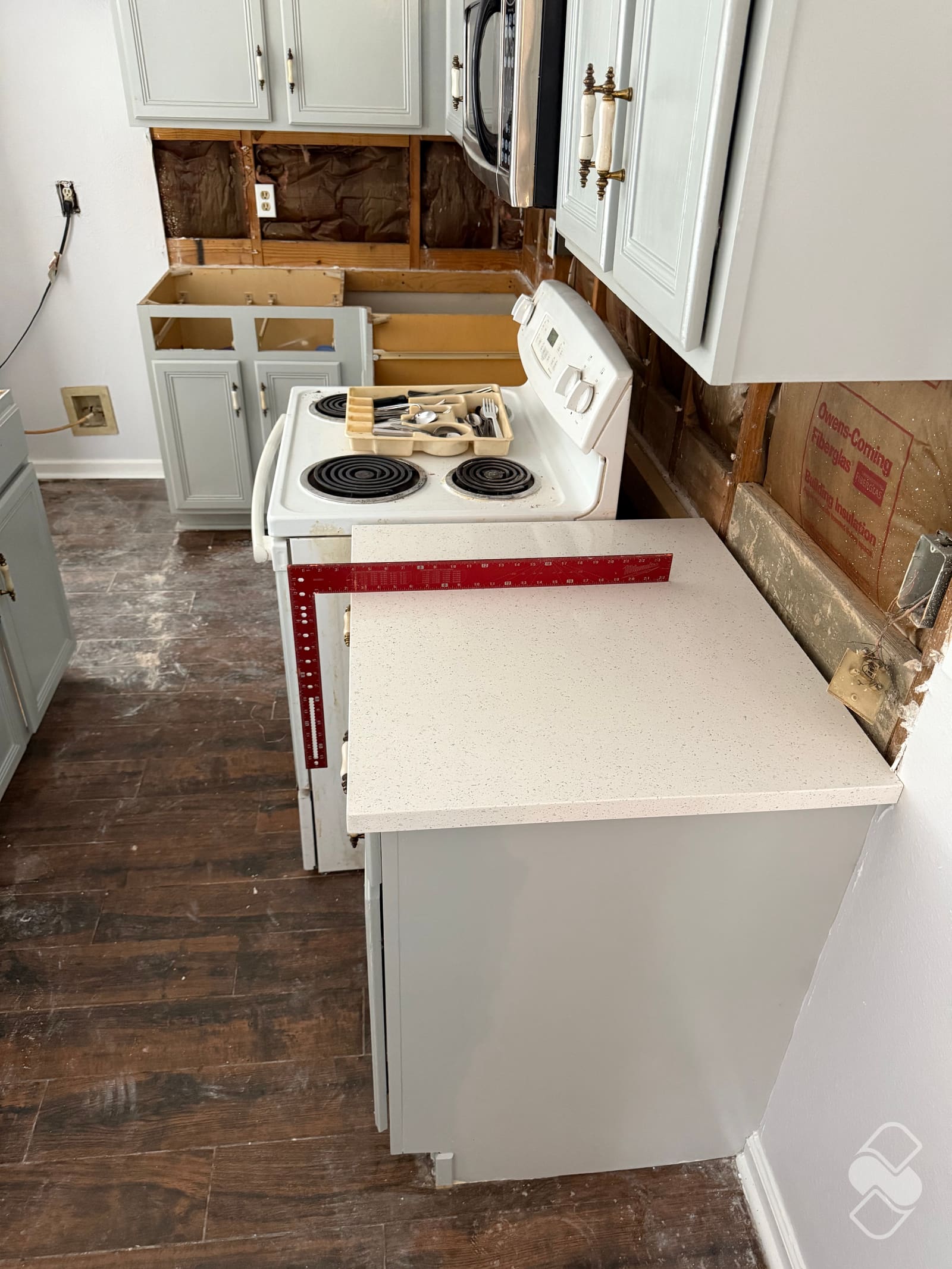
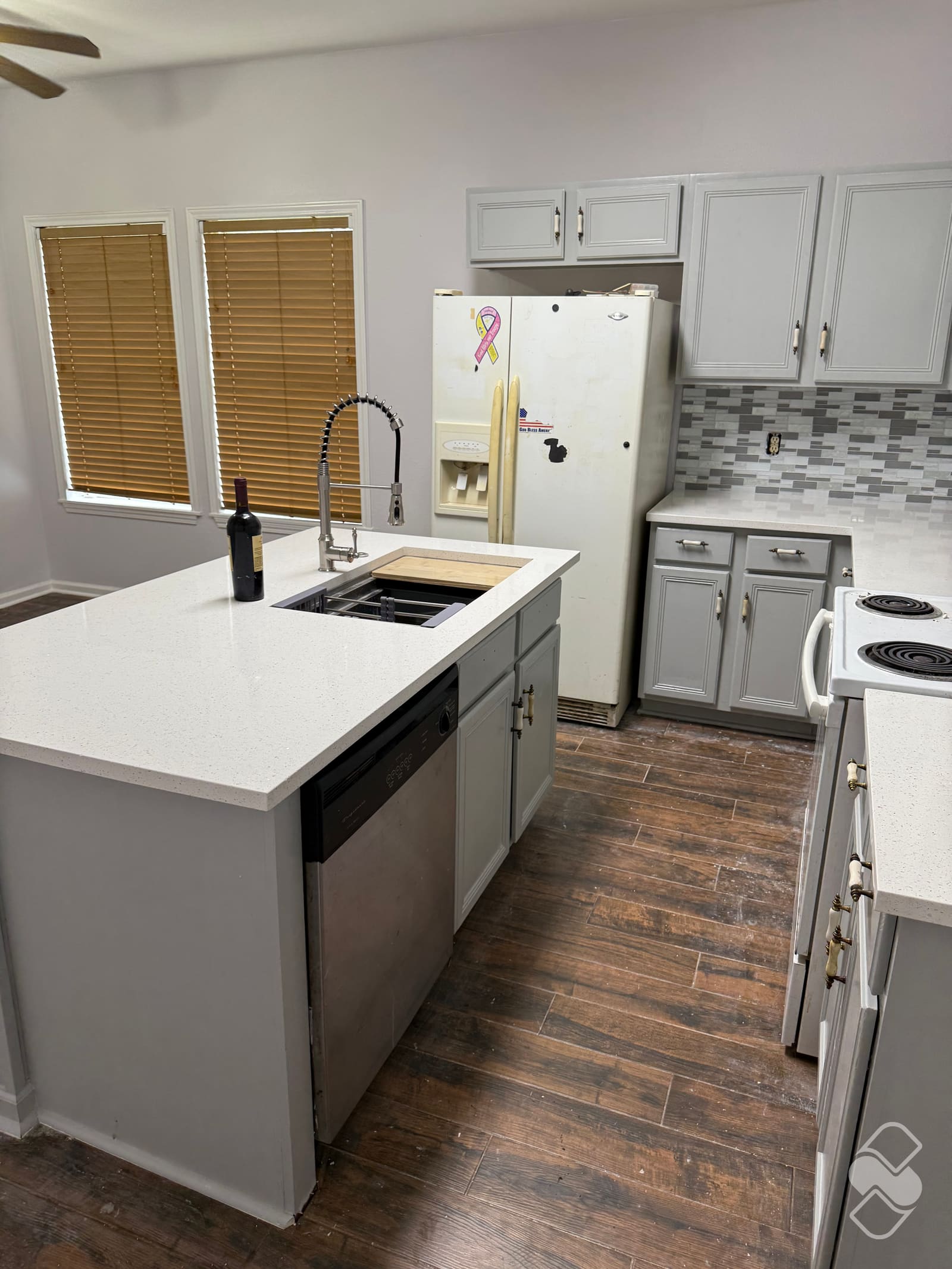
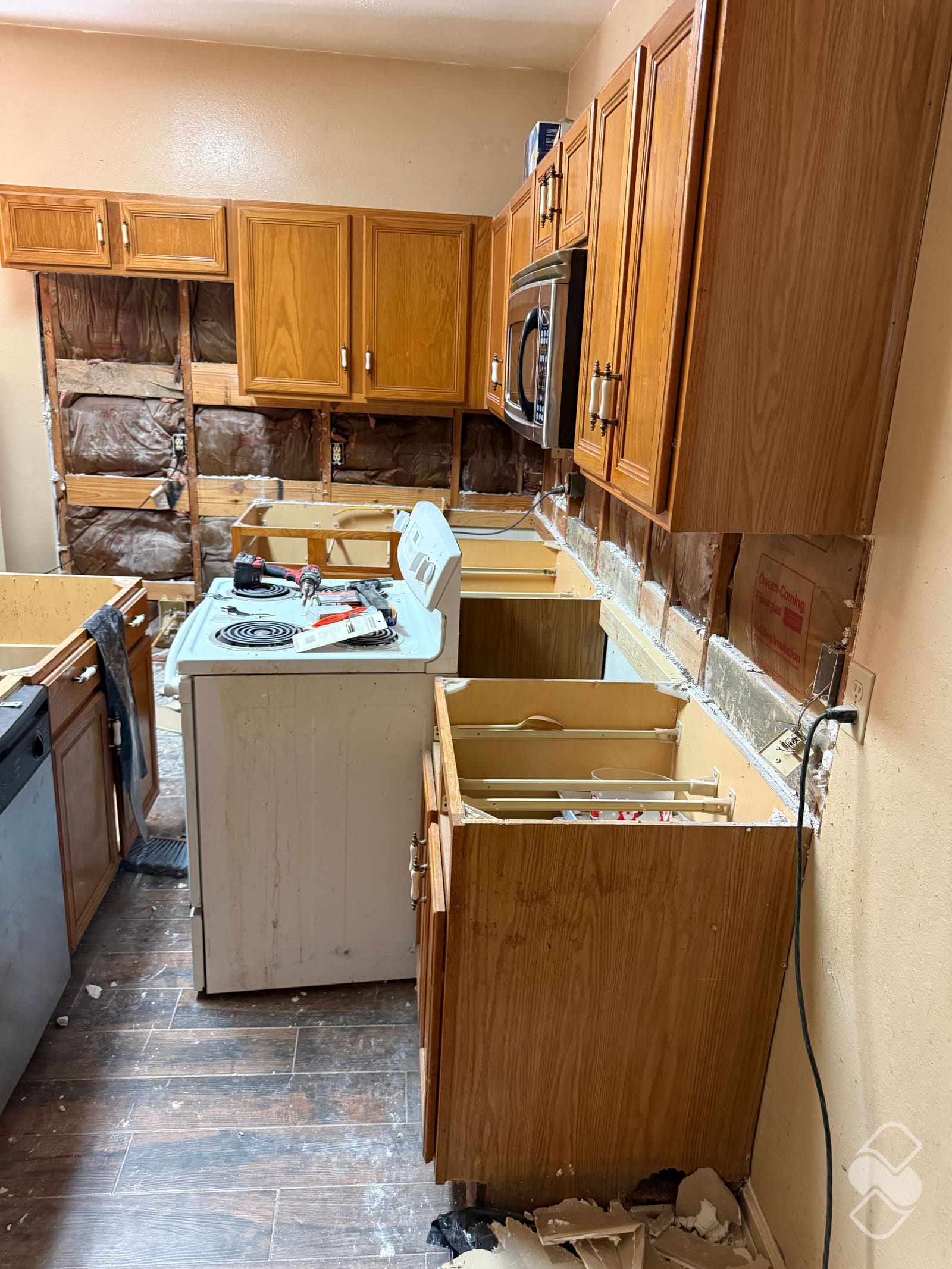
The kitchen cabinets in Cyndi's mother's house in Katy had been standing in water. A supply valve at the primary bathroom toilet had leaked while the house sat empty, the water crossed the whole one-story slab, and the bottoms of the base cabinets soaked it up. The boxes were solid oak, so instead of pulling them out we repaired the water damaged bottoms, had them painted, and set new quartz counters and a tile backsplash on top. The family got a kitchen that shows like new without paying for new cabinets.
Our paint vs. replace guide covers the decision. This one is about the work itself, what the kitchen is like while it happens, and when we tell people to skip it.
Why a sound box is the whole question
Paint is a skin. It makes a cabinet look new, but it does not make a cabinet strong. So the first thing we do on a cabinet painting quote in Katy or Cypress is open the doors, pull a drawer, and press on the bottoms and the toe kicks to see what the box is made of and whether it has been wet.
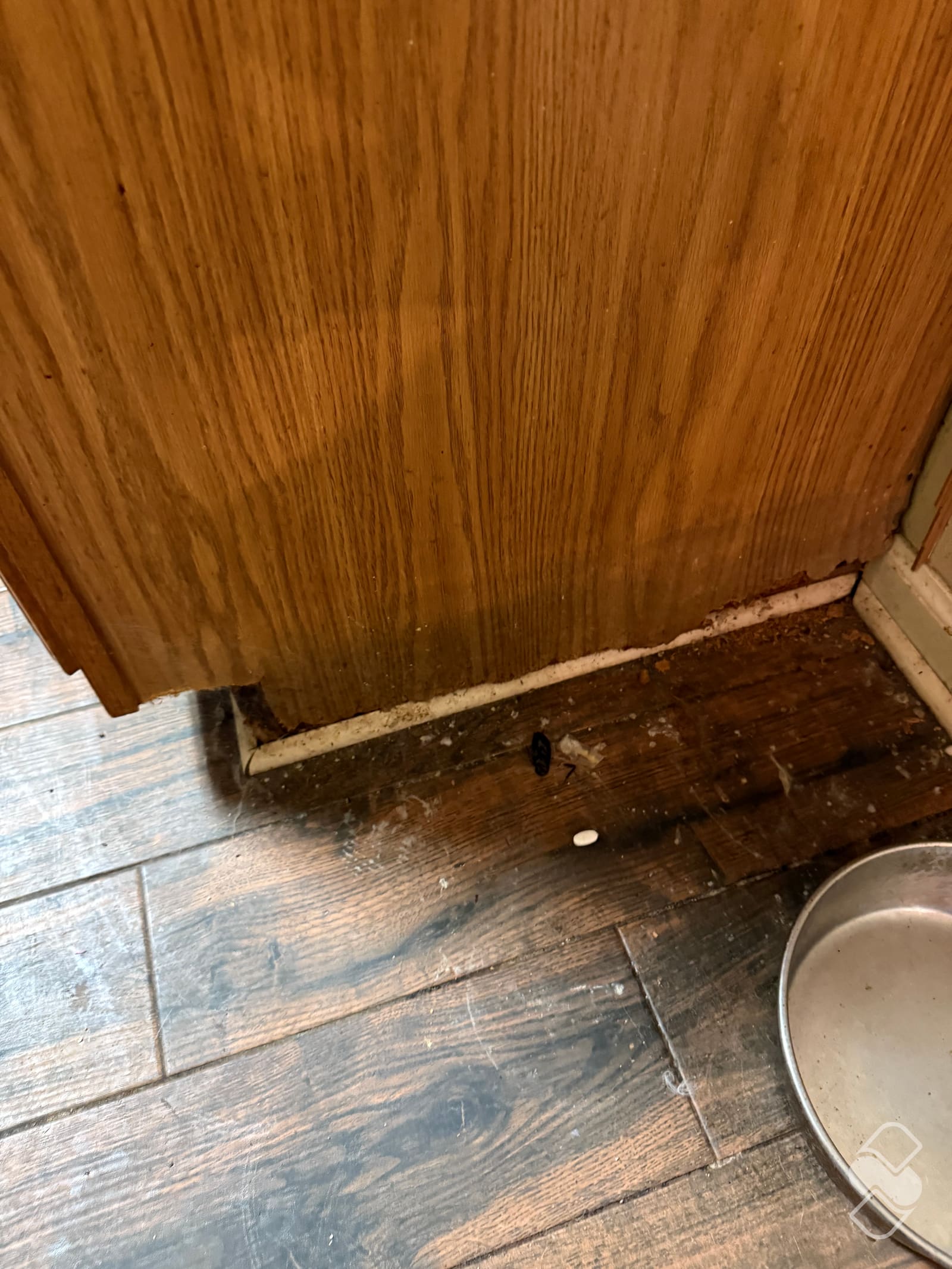
Solid wood and good plywood boxes tend to take paint well and keep it for years. Particleboard that has swelled from a leak under the sink is a different story: the surface crumbles, the hinge screws loosen, and paint over that is money spent on a cabinet that is already failing. In our experience a sound but ugly box is a paint candidate and a failing box is a replacement conversation, and we say so on the walkthrough even when it is the smaller job for us.
The Katy house sat right on that line: sound oak above the waterline, damage at the bottom. Because the damage was in one place and the wood was solid, the fix was a repair, not a tear-out.
What does a professional cabinet painting process look like?
The order matters more than any product name.
- Doors and drawers off, labeled. Every door, drawer front and hinge comes off with a label that matches its opening. Sprayed flat is how a door gets a factory feel.
- Repairs first. Water damaged bottoms, loose joints, chipped edges and old hardware holes get fixed now. At the Katy house the water damaged bottoms were repaired before a drop of primer went on.
- Degrease. Cabinets carry cooking oil, hand oil and years of cleaner residue, and paint does not bond to any of it. This step decides whether the finish stays on, and it is the one a low bid tends to skip.
- Sand or scuff. A glossy factory finish gets scuffed so the primer can grip; old peeling paint gets sanded back to sound material. Oak grain is its own decision. On Suzzy and Amanda's kitchen in the Heights the original oak uppers were painted crisp white over deep charcoal bases. Paint alone usually leaves oak grain showing as texture; filling it first so the door reads flat is an added step, and we ask which look you want before the primer goes on.
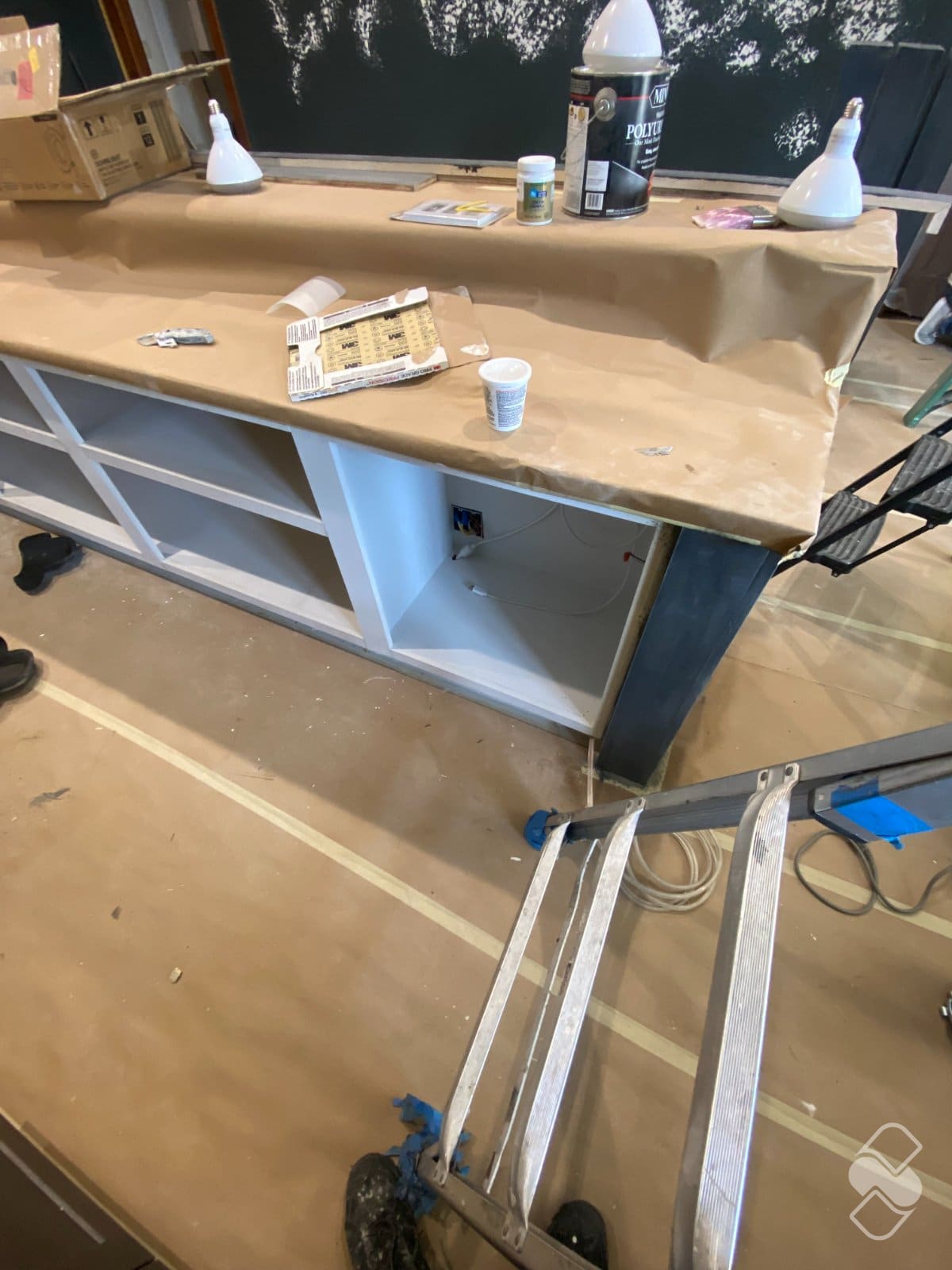
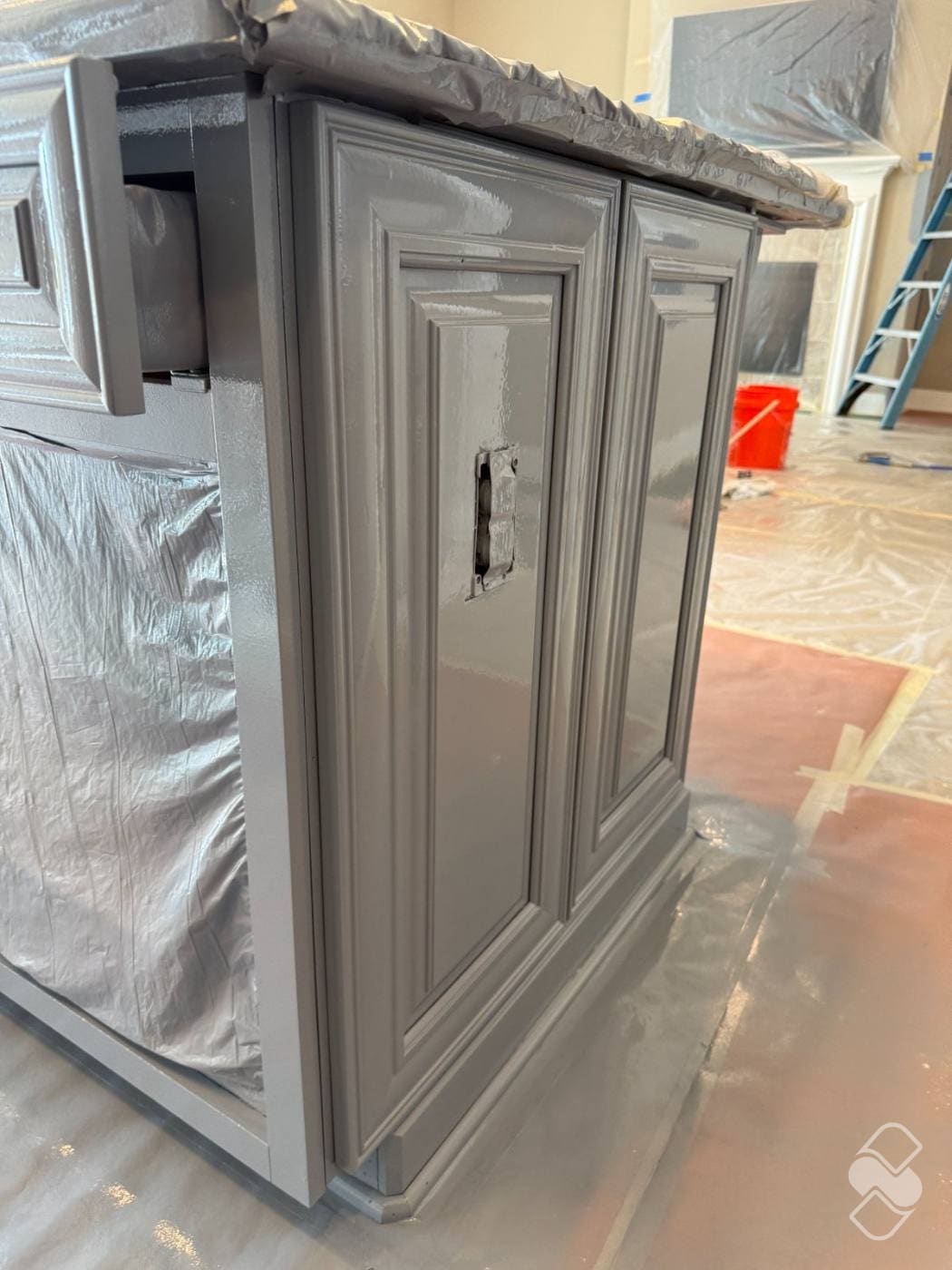
- Mask the kitchen. Counters, appliances, floors and the openings into the rest of the house get covered. On Sherri's bar in Tomball the counters were masked off while we painted the cabinets inside.
- Prime with the right primer for the material. A bonding primer matched to what the cabinet is made of, whether bare oak, a factory finish or old paint.
- Spray the finish. Cabinet-grade enamel, sprayed, not wall paint and a brush. Boxes are sprayed in place behind the masking; doors and drawers are sprayed flat, with coats cured between passes so the finish builds hard instead of soft.
- Let it cure. Dry to the touch is not cured. The enamel keeps hardening after it feels dry, and the doors go back on only when they can take it.
- Rehang, align, hardware. Every door returns to its labeled opening, hinges get adjusted so the gaps are even, new pulls go on if you wanted them, and we walk it with you in kitchen light.
How long does cabinet painting take?
The calendar tends to be set by cure time, not by how fast anyone can move a spray gun. Spraying a set of doors is quick. Waiting for each coat to harden before the next, and then for the finish to cure before the doors can be handled, is where the days go. More doors and a bigger color change mean more passes through that cycle.
For scale: on Kathleen and Barry's home in Katy, the kitchen island and every bathroom cabinet were repainted inside a fourteen-day whole-house remodel, one scope line among many. At the flooded Katy house the cabinet repair and paint ran inside about three weeks for the whole job, counters, backsplash, carpet and deck included. A kitchen's cabinets on their own, with no counters, floors or deck in the way, usually take less time than either of those jobs. What sets the exact days is your door and drawer count, the size of the color change, and the cure time between coats, which is why we count the doors on the walkthrough and put the days in writing with the price instead of guessing on the phone.
What is the kitchen like to live in during the job?
Better than most people expect. The boxes are painted on site behind masking and the doors cure in a controlled area, so the kitchen usually stays usable through most of the project. You live with open shelves for a while, counters under paper, and a short stretch when the room is off limits while the boxes are sprayed and the first coats harden.
Containment is part of the job, not an extra. The kitchen is masked off and the dust is controlled, so overspray and sanding dust stay in the kitchen instead of drifting through the house.
How durable are painted cabinets?
With real prep and cabinet enamel, a sprayed finish tends to handle daily kitchen life for many years. Edges and the few doors you touch all day wear first on any finish, factory ones included. What we see fail early is a short list:
- Skipped degreasing. Fine at first, then the paint lifts near the range and the trash pull, where the grease was.
- No primer. Enamel over a slick factory finish with nothing to grip chips at the first fingernail.
- Brushing where spraying belonged. Brush marks on a door read as a project, not a kitchen.
- Rushing the cure. Drawers loaded the day they were sprayed; the finish prints and scuffs at the pulls.
Every one is a prep or patience failure; our interior paint prep guide says why.
Cabinet painting or cabinet refacing in Katy: what is the difference?
Painting keeps your doors and boxes and changes the finish. Refacing keeps the boxes, covers their faces with new veneer, and replaces the doors and drawer fronts with a new style. The version we do, when the boxes are sound but the door style is the problem, is to paint the boxes instead of veneering them, order new doors and drawer fronts to match, and put new hardware on all of it: the painted-box half of a paint job, the new-door half of a reface. Our paint vs. replace guide calls it the in-between option. If the layout is the problem, none of these fix it.
When to skip cabinet painting
The paint vs. replace guide covers the decision in full; the three cases we hit most are these. The boxes are failing: swollen, sagging or soft from water, with hinges that have let go. The layout is wrong: at Shirley's kitchen in Cypress the multi level layout with the raised bar was the real problem, so the bar came down and new cabinets were custom built on site by a separate crew. Paint does not fix a layout. The storage is wrong: if you need deep drawers, pull-outs and soft-close that your boxes were not built for, a respray does not get you there. If a quote jumps to a full tear-out before anyone has opened a door, that is a good time for a second opinion.
What moves the price
The honest unit of cabinet work is the door and drawer count. Condition is next: grease, dents, old peeling paint and water damage all add prep, and prep is where the labor lives. A big color change takes more coats. Painting the insides of the boxes adds surface area most people do not need. New doors and drawer fronts sit between painting and replacing, and hardware is its own line.
Two relationships are worth knowing. Repairing sound boxes and painting them runs a fraction of replacing them, which is what made the Katy house work for Cyndi's family. And if the counters are coming off anyway, that is the time to paint the bases: at the Katy house the boxes were painted with the tops off and the quartz went down on a finished cabinet. For how cabinets fit a larger budget, our kitchen remodel cost guide walks the whole room. We walk it, measure it, count the doors and write it down.
What to ask whoever quotes it
Whether you call us or another kitchen cabinet painter in Houston or Katy, ask these before you sign:
- Did you open the doors and check the boxes for water damage, and what did you find?
- Are the doors and drawers coming off and being sprayed flat, or painted in place?
- What are you degreasing with, and is sanding or scuffing in the scope?
- What primer are you using, and why that one for my cabinets?
- Is the finish sprayed cabinet enamel, and how long should I go easy on the doors after?
- How are you keeping overspray and sanding dust out of the rest of the house?
- If a box turns out to be bad, what happens to the price and the plan?
Done right is cheaper than done twice, and in Katy, Cypress and Greater Houston a cabinet paint job done right starts with someone opening your doors before they write a number. If your boxes are sound and your layout works, our cabinet painting service gets you a kitchen that looks new without a demo day; if you are not sure, the paint vs. replace guide gets you close. Send us a photo of the inside of a base cabinet and we will tell you what we see.