
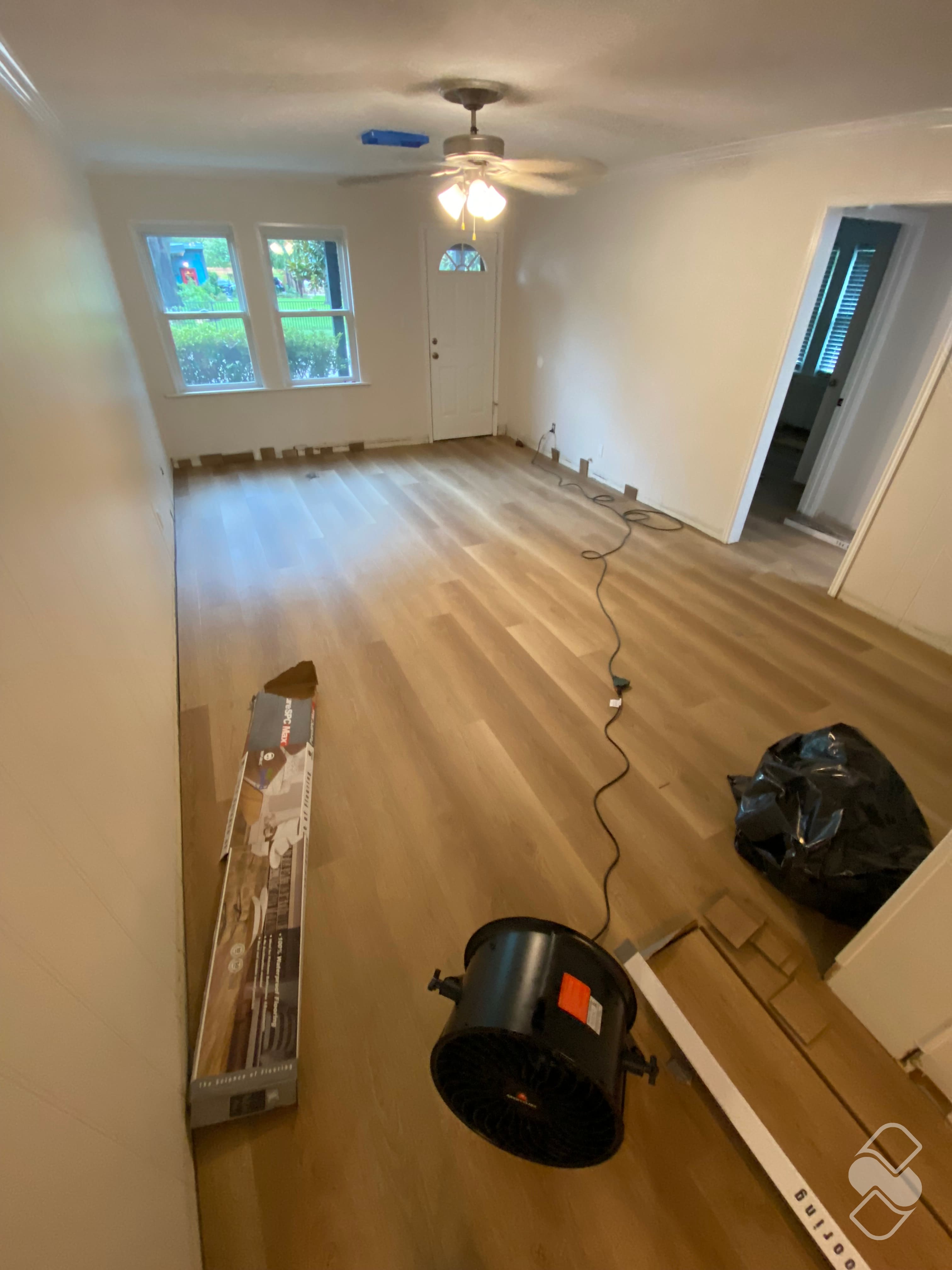
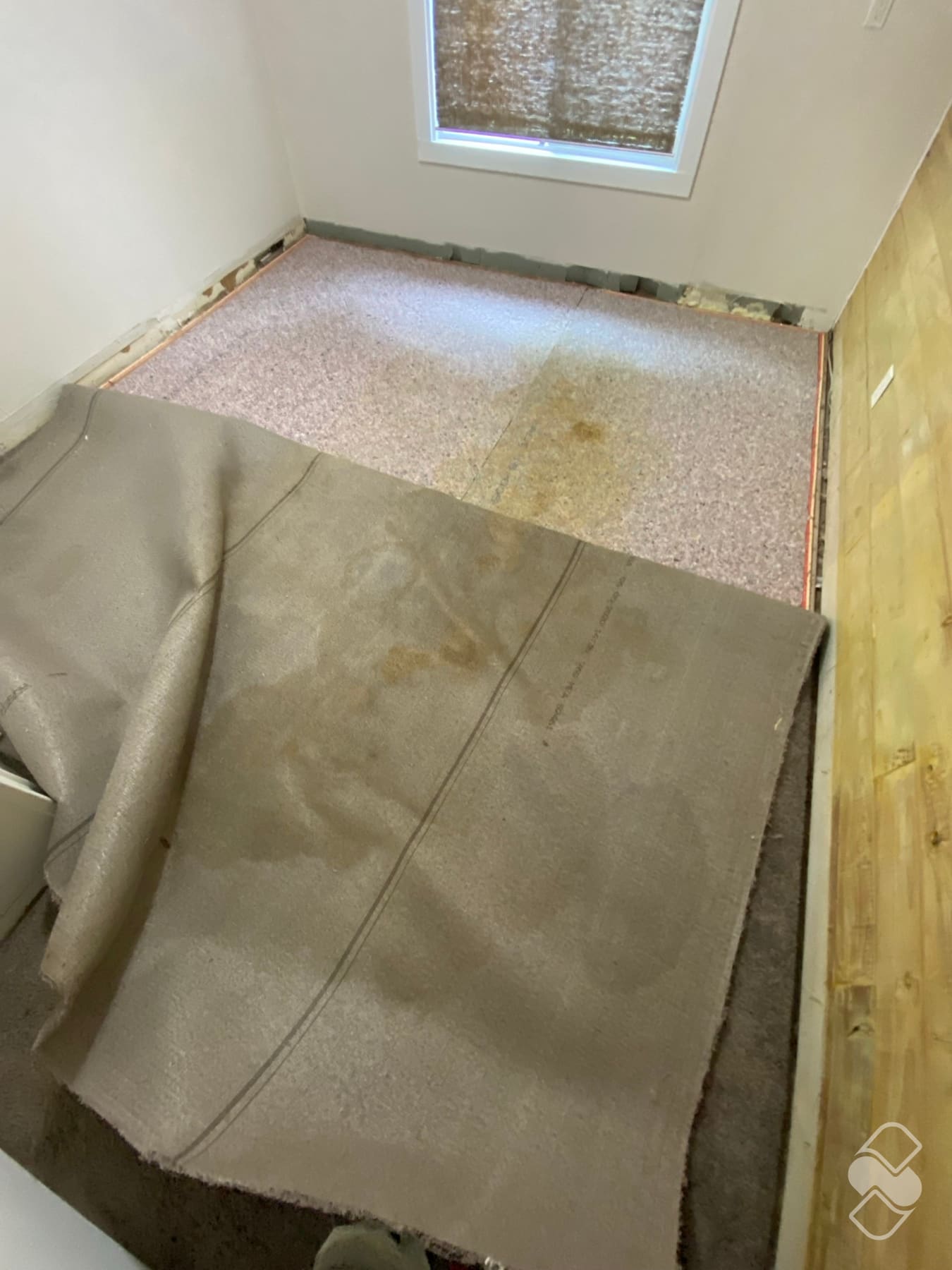
Cathy's rental in Tomball had new flooring in it before we showed up, and it still was not ready for a tenant. A hump over one of the beams kept pushing back up through the new floor, and the bedroom carpet was hiding years of stains. That is the rental and flip problem in one house: money spent once on a floor, about to be spent again.
This guide is for the investor and realtor side of our work: what we see hold up through tenants and showings, what we would leave alone, and how to sequence the floor so it goes in once. Where we have already written the detail, like the make-ready fix or skip list or the LVP, tile and hardwood comparison, we link it rather than repeat it.
Should I replace carpet before selling or renting a house?
In the living areas, usually yes. Carpet in a living room or a hall tends to photograph tired even when it is clean, and in our experience a buyer reads it as a question: what else did they leave? At Cathy's rental the carpet came out and one continuous luxury vinyl plank floor went through the house. At Cyndi's mother's house in Katy (the flooded family home), a leaking toilet supply valve had soaked every carpet in the house, so all of it came out.
Bedrooms are the judgment call. At the Katy house the ceramic tile through the rest of the house was sound, so it stayed, and the bedrooms got new carpet. The whole house was clean, dry and ready for the market about three weeks after demo started. New carpet in a rental living room tends to be the floor you replace again at the next turnover. The full carpet-to-plank job, layer by layer, is in our whole-house carpet to plank guide.
Keep the hard floor that is sound
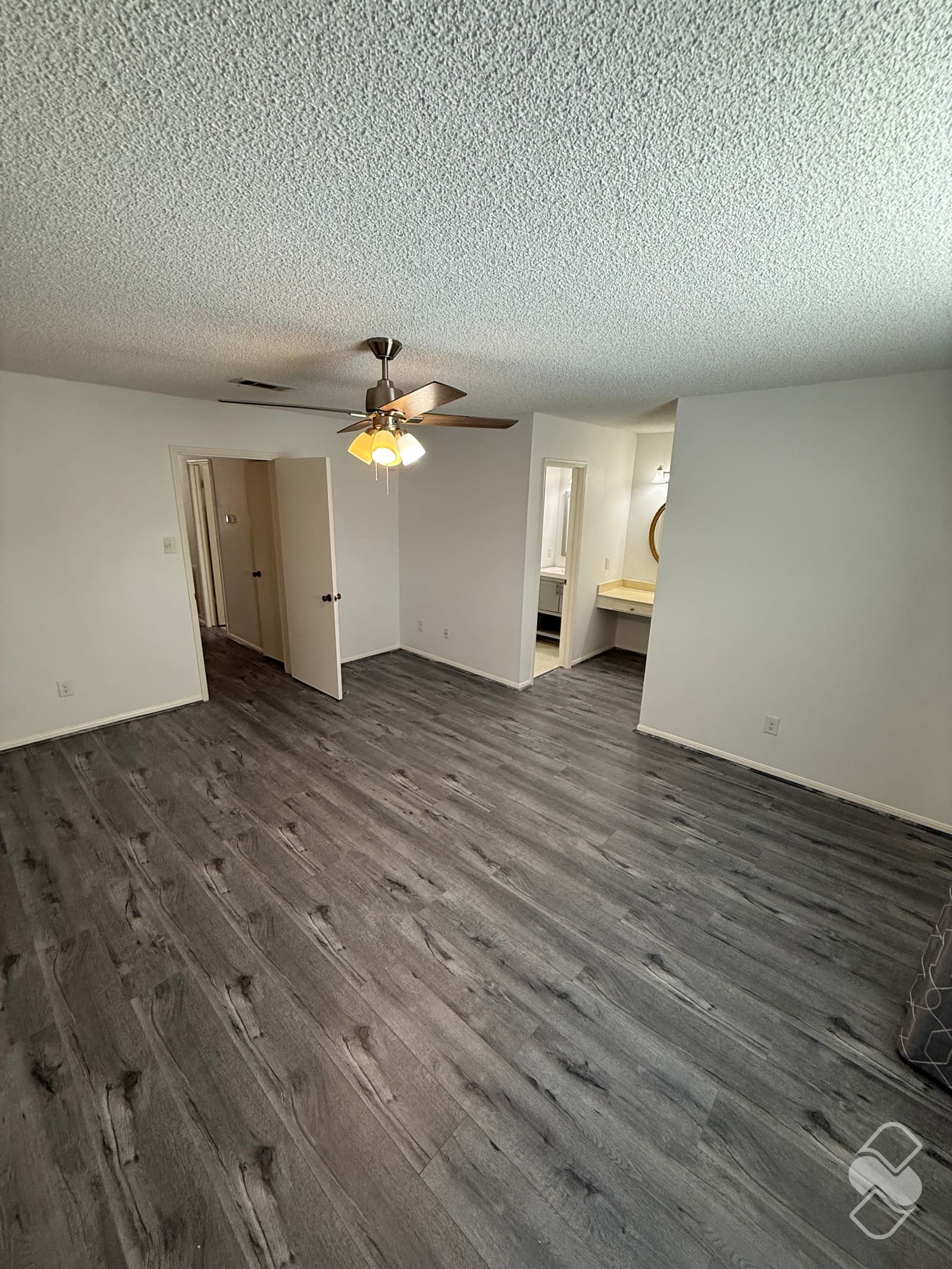
Tile that is sound stays. At the Katy house the ceramic tile throughout had come through the flood fine, so we left it alone. The gray plank floors in Mandana's townhome off I-10 were already in good shape, so they stayed too; the two weeks went into the leak under the upstairs toilet, the wallpaper, the paint and the long list of small repairs. When Mandana decided the bathroom floors should go too, we came back for two days and tiled both.
Chipping out a floor that is fine is tear-out money a buyer tends not to notice. Clean it, regrout it if it needs it, and put the budget where it photographs.
Why one continuous floor reads bigger in listing photos
Carpet in the living room, tile in the kitchen and a third floor in the hall turns every doorway into an edge in the listing photos. In our experience one floor from the front door through the living areas reads as one space.
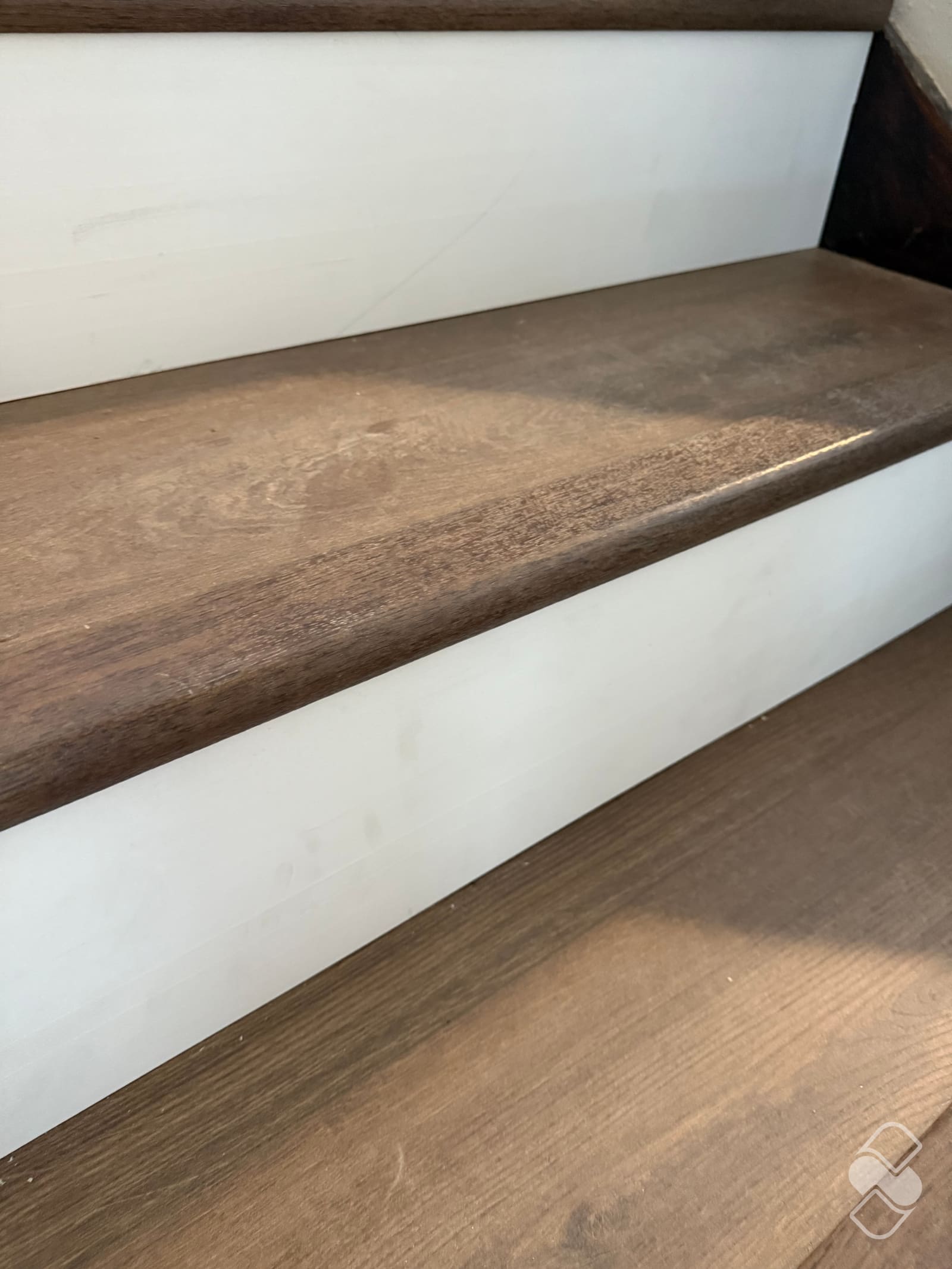
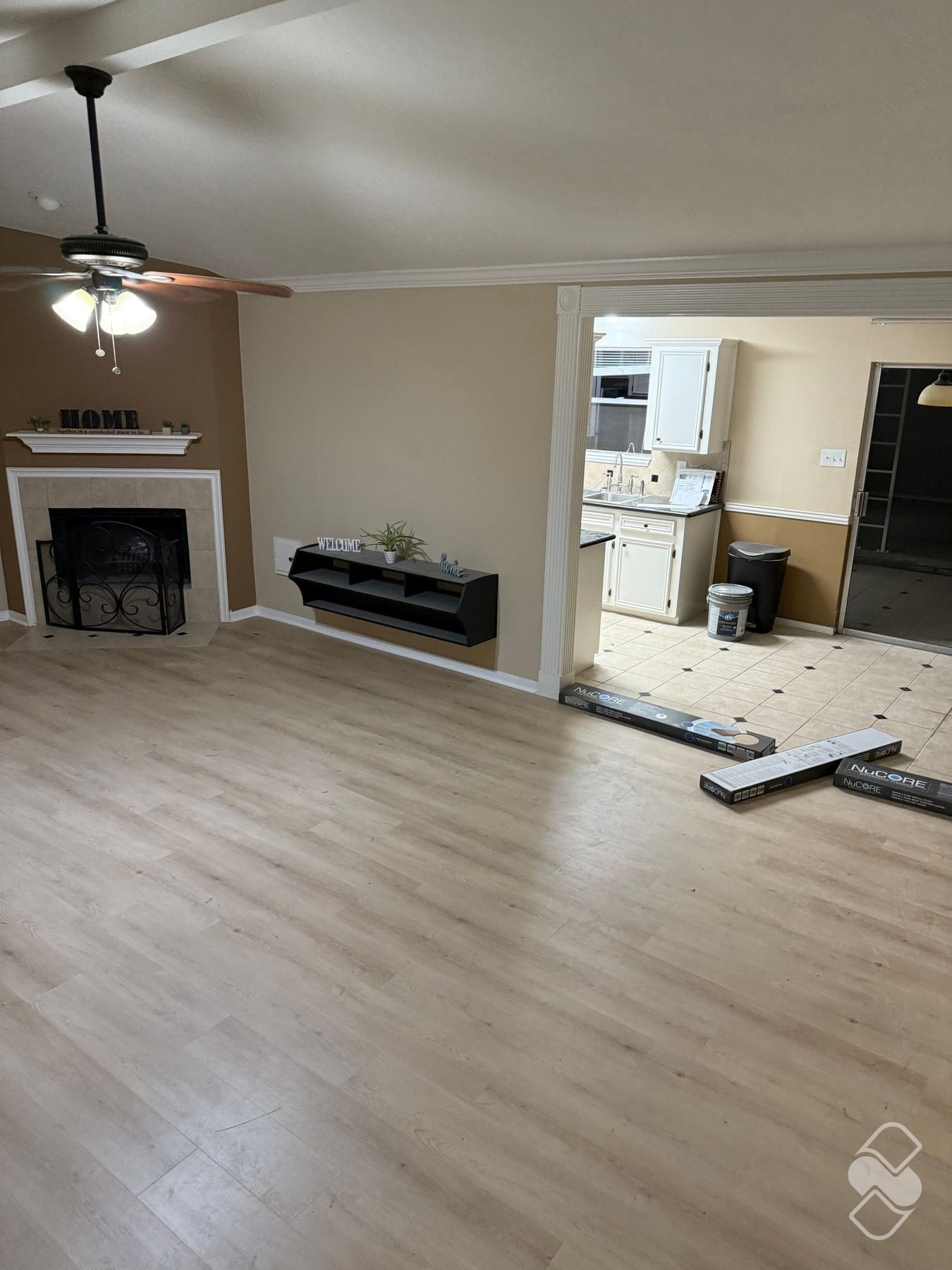
At the Cypress house that was about to list, the light oak plank runs from the front door through the living room to the kitchen, where it meets the kitchen tile with a T-mold. At the Moonflower house, a market-ready flip in Katy, warm wide-plank flooring runs through the main spaces under crisp white cabinets and refinished stairs, and then the house was photographed like a listing, because it became one.
What do tenants and inspectors actually find?
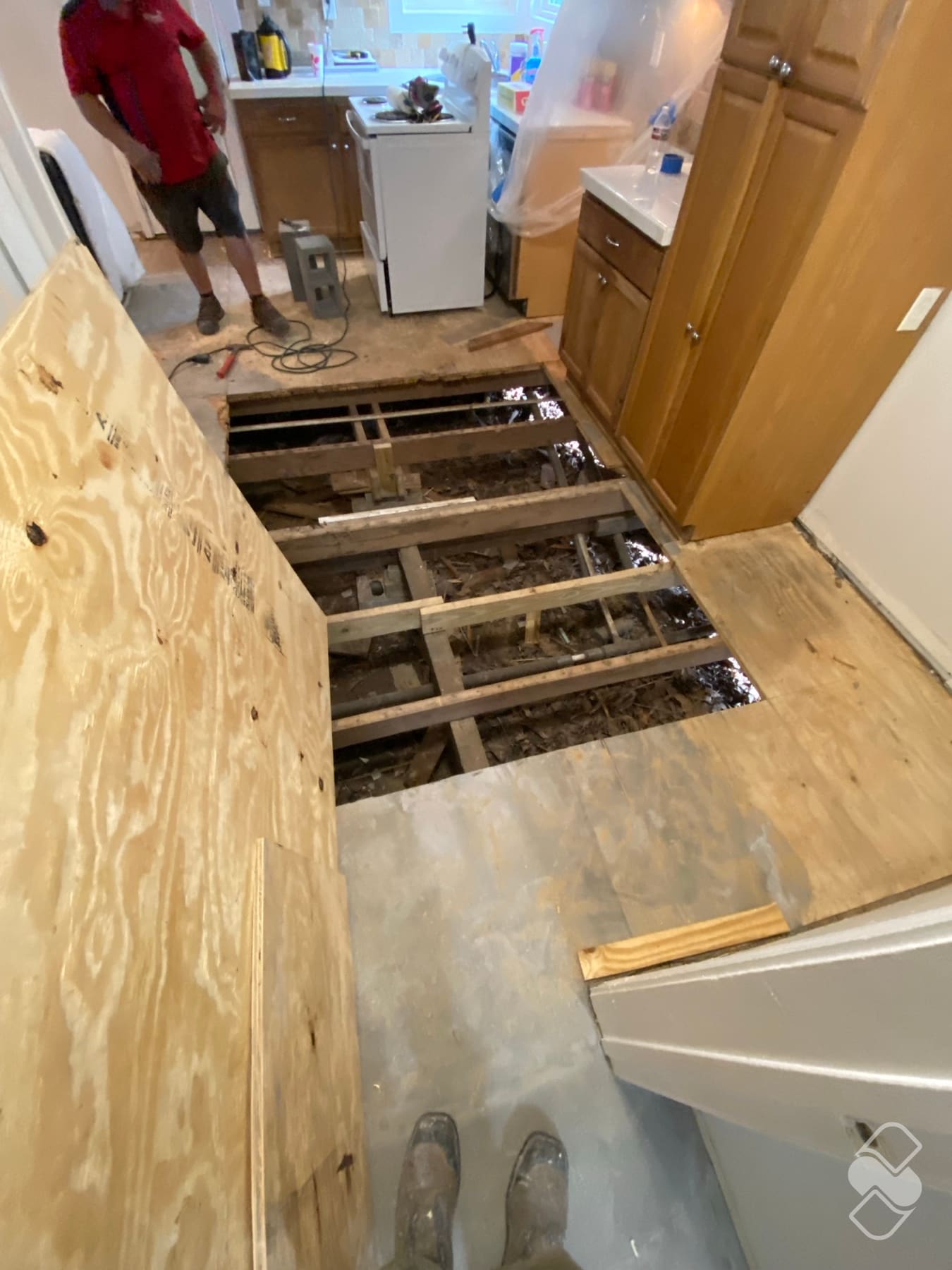
- Humps and soft spots. Cathy's hump was over a beam in a pier and beam house. We opened the kitchen floor over it, reframed that section flat, leveled, and only then ran the plank. On a slab the same problem is a floor that was not flat to begin with: under the old tile at the Cypress house the foundation was far from flat, so rather than chase low spots we floated the entire area with self-leveling underlayment. Plank laid over either problem tends to click, flex and open at the seams, often within months.
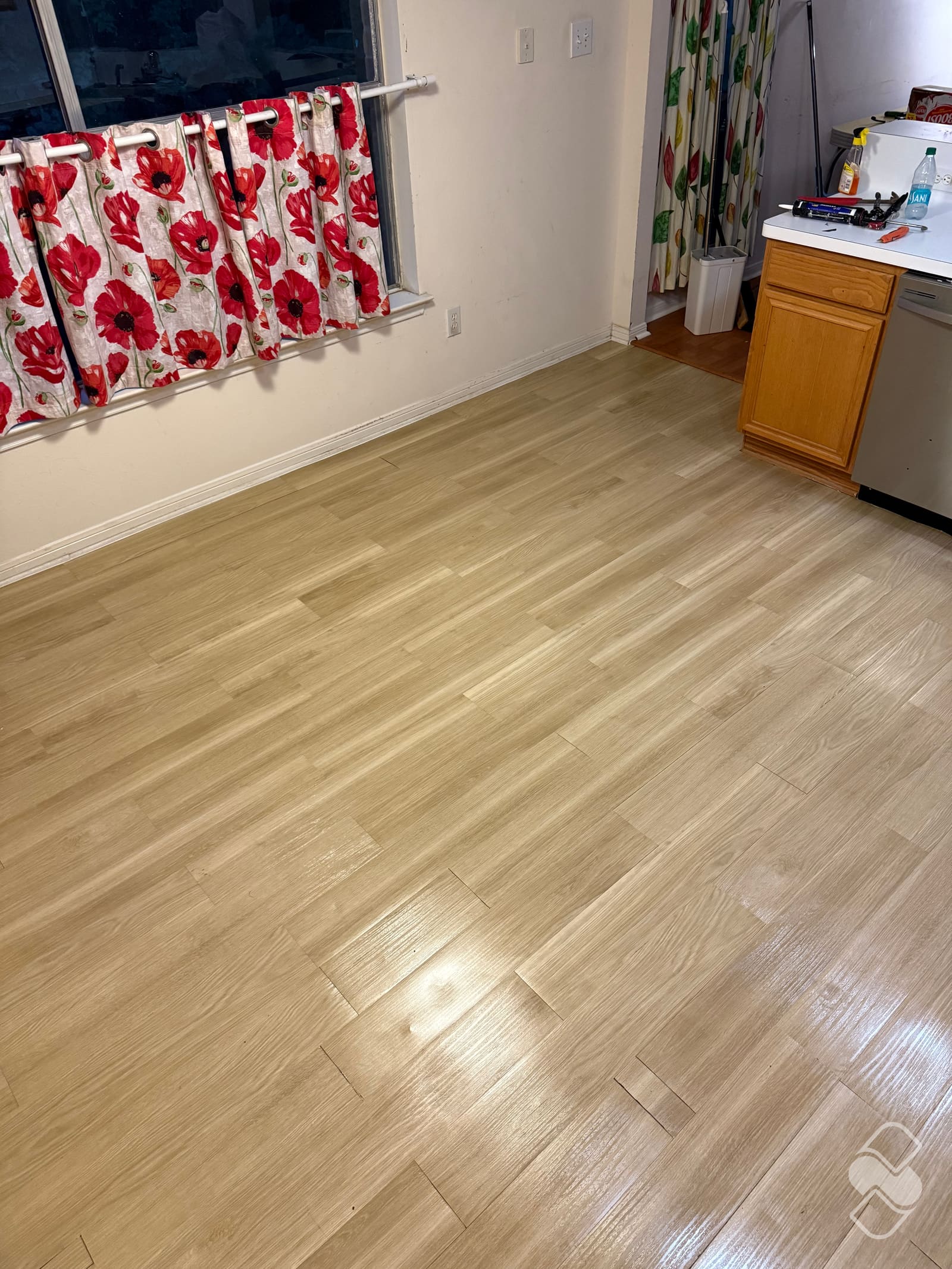
- Loose transitions. A T-mold that lifts under a foot is often the first thing a tenant catches with a toe. At the Cypress house the flooring boxes in the finished photos were holding the new T-mold flat at the kitchen tile while it set.
- Water under the floor. The Katy house started with a supply valve, the townhome with a broken flange, the Cypress house with an attic water heater. The leak gets fixed and the house gets dry before any floor goes down.
Is LVP good for a rental property?
For the living areas of a rental, it is the durable choice we put in more often than any other: it shrugs off spills, traffic and humidity. The planks themselves are waterproof, so a spilled bowl or a wet dog is usually a mop job. And when a tenant drags a dresser across it, one damaged plank can usually be swapped without redoing the room.
The spec that matters for a rental is the wear layer, not the total thickness. For busy households and pets we generally point people to a 20 mil wear layer; lighter-use rooms can go 12 mil. A tenant with a dog is a busy household, so for a rental we lean toward the thicker option.
What we would skip: thin budget plank, plank over a slab that was not checked for flat, peel and stick plank, and, in our experience, carpet in any room with a door to the outside. Tile still earns its place in baths and entries. At Mandana's townhome it was the two bath floors, tiled on a two-day return trip after the rest of the job was done.
Where the floor sits in a make-ready schedule
The whole-house order is in the make-ready guide; here is where the floor lands in it.
- Walk it and write it down. At Mandana's we walked the townhome, said what needed repair and what only needed updating, and wrote it up before anything started.
- Fix what is under the floor: stop the leak and dry the house, reframe a humped section, float a rough slab.
- Paint walls, ceilings and cabinets before the floor, so no roller spatter or ladder foot lands on new plank. Cathy had her own interior painter, so we sequenced our work around that crew and kept both moving.
- Tear out, prep and lay the floor, and set the transitions, held flat until they cure.
- Baseboards over the new plank, then their final coat, so whoever is painting needs a short return trip.
- Bath and laundry tile, if it is in scope. Mandana's two bath floors took a two-day return trip.
- Clean, stage and photograph. At the Moonflower house, listing photography was the last line of the scope.
The finish that sells vs. the one you would pick for yourself
For your own house you pick the floor you love. For a flip or a rental you pick the floor the widest group of people has no objection to: a neutral wood look plank in a light to mid tone with calm grain. Light and warm neutrals tend to read bright in a photo, and in our experience very dark floors show every footprint at a showing. A warm wide plank is what went into the Moonflower house; a light oak went into the Cypress house. What to fix and what to leave in the rest of the house is in the make-ready guide, so we leave that list there.
What moves the price of a make-ready floor
- The product. Plank runs more than carpet and less than tile. Inside plank, the wear layer is where the money goes, and it is the part worth paying for on a rental.
- What is coming up. Pulling carpet is the lightest tear-out we do. Chipping up old tile can cost two to three times as much as pulling carpet for the same area, one more reason to keep tile that is sound.
- What is under it. Reframing a beam section or floating a slab is its own line, the one a low bid tends to leave out and the one that usually decides whether the floor is still flat at the next turnover.
- How chopped up the plan is. Open living areas go down faster than small rooms and closets, and a doorway where the floor changes adds a transition.
- What you keep. Leaving sound tile or plank in place, the way Mandana's floors stayed, is usually the biggest single lever we see on a make-ready floor budget.
We do not price a floor we have not stood on. We walk it, measure it, check it for flat and write it down, line by line.
What to ask whoever quotes it
- Did you walk it and check the floor for flat, and is leveling or reframing its own line in the scope?
- What wear layer is on the plank you priced, and what does the thicker option change?
- Are you painting before the floors go in, and who comes back for the baseboards?
- Which existing floors did you judge sound enough to keep, and why?
- How are the transitions handled at the tile and at the doorways?
- How many days from tear-out to tenant-ready, and is that in writing? Mandana's townhome took two weeks plus a two-day return for the bath floors; the Katy house took about three weeks.
Done right is cheaper than done twice, and on a rental the second time can come with a vacant month attached. If you have a unit or a flip in Katy, Cypress or anywhere in Greater Houston that needs floors before it can earn, ask us to walk it with you, or call or text (877) 411-4007. We will tell you what stays, what goes, and write both down. The luxury vinyl plank page and the carpet to plank guide cover the product and the job.