
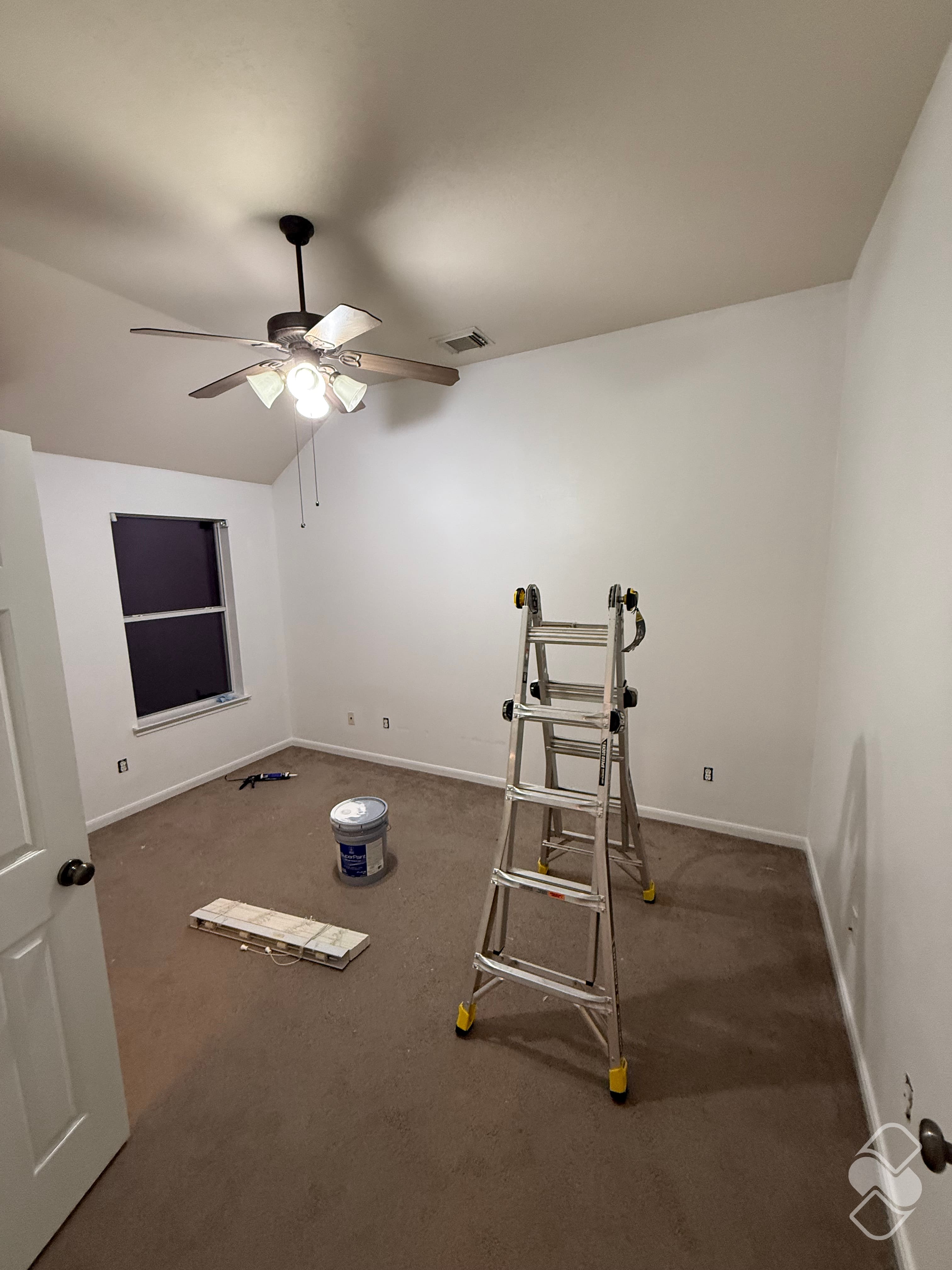
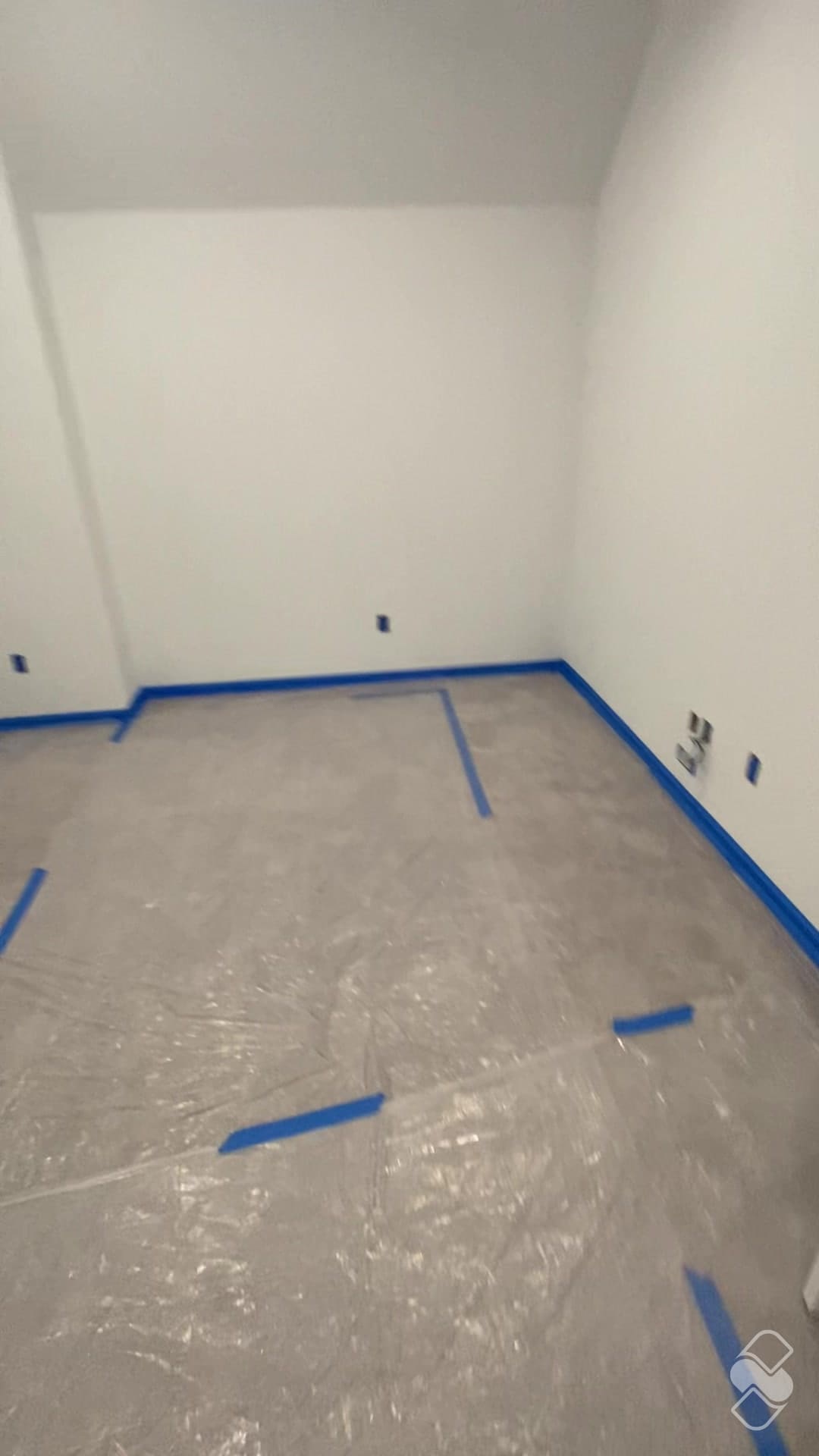
Zubin's game room in Sugar Land went from builder white to a deep gray (Sherwin-Williams Before the Storm), walls and vaulted ceiling in one color, in a single day. The painting itself was the fast half of that day. The other half went to plastic over the carpet, tape along every baseboard and casing, and cover plates coming off the walls, because dark paint over white shows every wobble from across the room. That split, prep at least as long as the painting, is the honest answer to how long interior painting takes.
This guide is the timeline from our own jobs, plus the line-by-line scope a painting quote should show you. Our prep guide covers why prep matters; this one covers the days and the quote.
How long does it take to paint a room?
One room, walls and ceiling, trim staying as it is: usually one day. Here is how the day tends to run.
- Morning: protect and prep. Furniture to the center or out, floor covered wall to wall, cover plates off and outlets taped, baseboards and casings taped for the cut line. Nail holes filled, sanded and spot-primed.
- Midday: ceiling first, then cut in. The ceiling usually goes before the walls so drips land on a surface that is getting painted anyway. Then the edges: along the ceiling, around casings, down to the baseboard. This is the part you are paying for.
- Afternoon: roll, dry, second coat. Walls rolled, dry time, then a second coat where the color calls for it. A deep gray over builder white usually does.
- Evening: tape up, plates on, walkthrough. Tape and plastic out, plates back on, a look at every cut line in good light.
On Zubin's job the plastic went down over the carpet first thing, and by that evening the plates were back on and the room looked like it had been built that color. Add the trim and doors to that room and in our experience you are usually into a second day, because trim is brushwork, doors have two faces and four edges, and enamel needs its own dry time before a second coat.
How long does it take to paint a house interior?
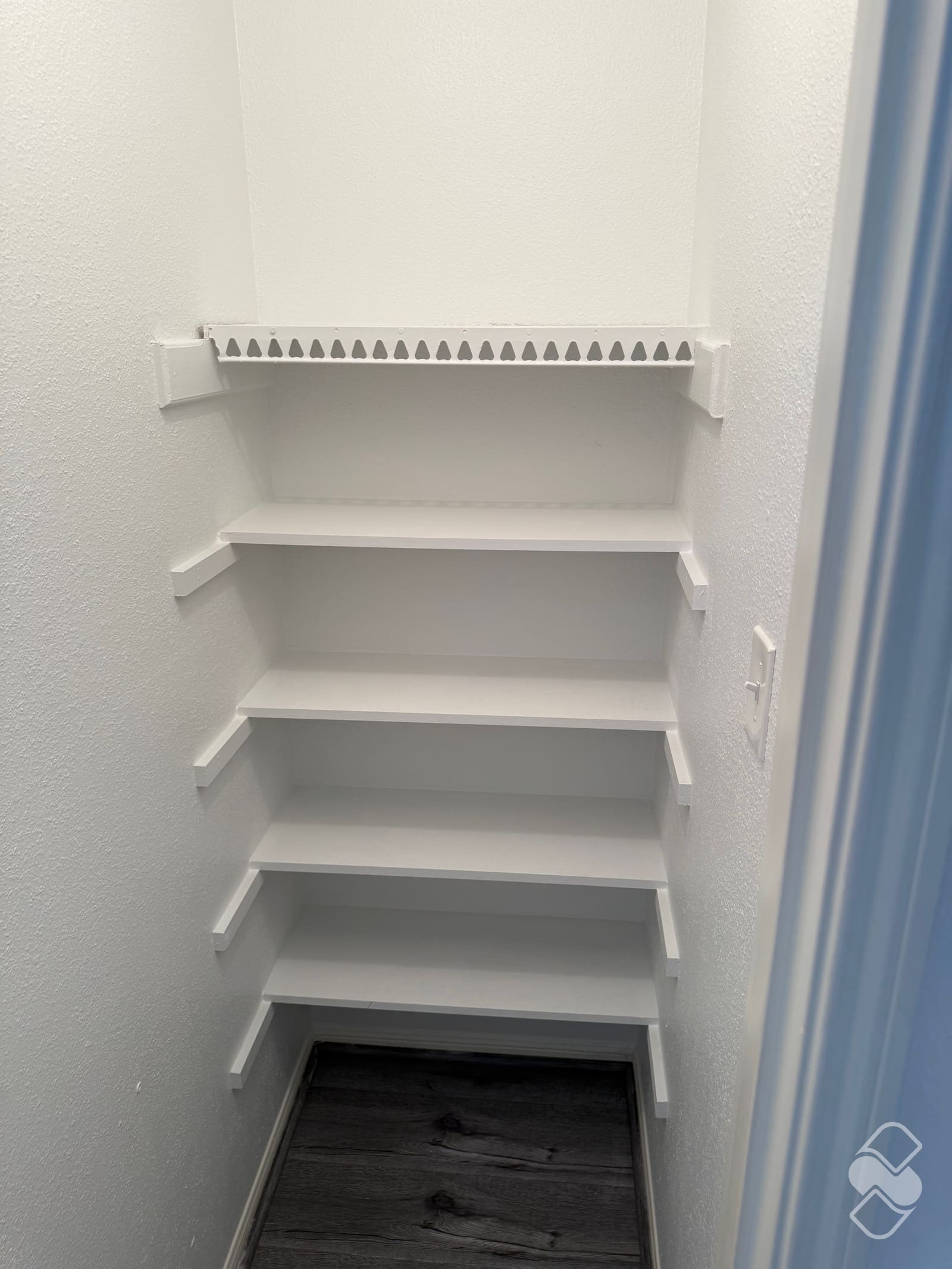
A whole interior is that same day repeated room by room, with one room drying while the next is cut in. Mandana's townhome off I-10 at the Beltway is a useful anchor. Wallpaper came down in two baths and the pantry, the walls under it were retextured to match the rest of the home, and then the whole interior was painted, closets and pantry shelves included. All of it fit inside a two-week make-ready that also had the kitchen ceiling opened to fix a leaking toilet flange above it.
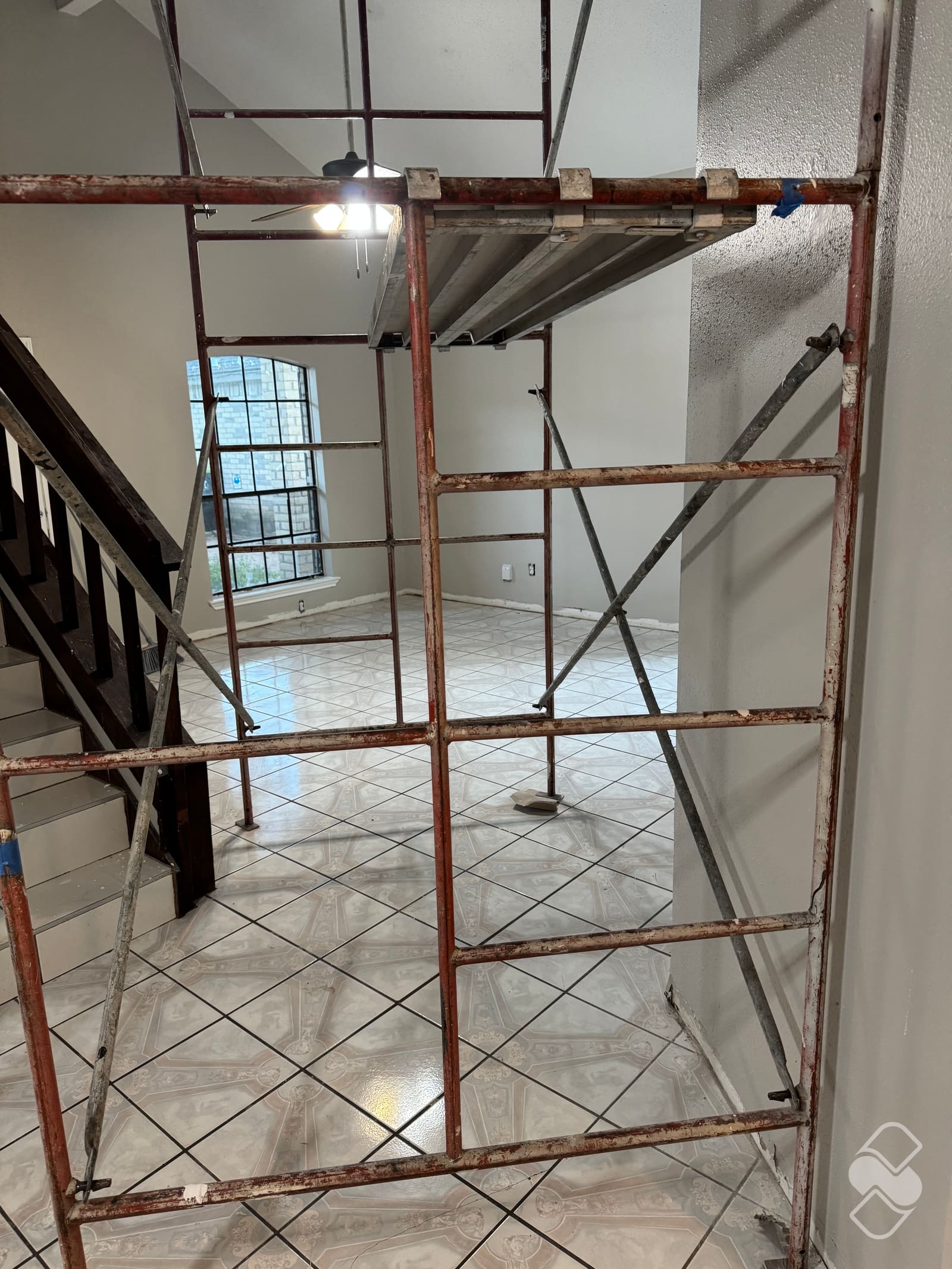
For the other end of the range, Kathleen and Barry's 4,400 square foot house in Katy had its whole interior repainted, a series of accent walls included, inside the same 14 days that new flooring went across 2,400 square feet of it and every other trade ran at once. So the honest bracket from our own jobs is one day for a room and about two weeks for a whole house when wallpaper, texture repair or other trades are in the mix. A clean-walled repaint on its own usually lands inside that range, and the walkthrough is where we pin the days down.
Which end of that range a house lands on comes down to how many rooms, what shape the walls are in, and whether anyone is living there while it happens. Here is the order we run.
- Walk and write it down. Every room, ceiling, closet and door counted, repairs noted, colors and sheens set per area. This is the scope, and it comes before anyone opens a can.
- Protect and repair. Floors covered, furniture shifted and wrapped, patches, nail pops and cracks fixed and sanded. On a house in rough shape this can be the longest phase.
- Prime where it counts. Patches, stains, bare drywall and big color changes get primer. Painting over a stain without it tends to show again.
- Ceilings. Usually all of them in a pass, so nothing drips on finished walls.
- Walls, two coats where two coats belong. Room by room, with dry time between coats.
- Trim, doors and closets. Baseboards, casings, door faces and closet interiors, pantry shelves if they are in the scope.
- Touch-up walkthrough. Every wall checked in daylight with you, misses fixed before we call it done.
An empty house usually moves fastest. An occupied one is slower: furniture moves twice and rooms get taken in an order that keeps a bedroom and a bath usable.
What about a repaint with wallpaper or texture repair?
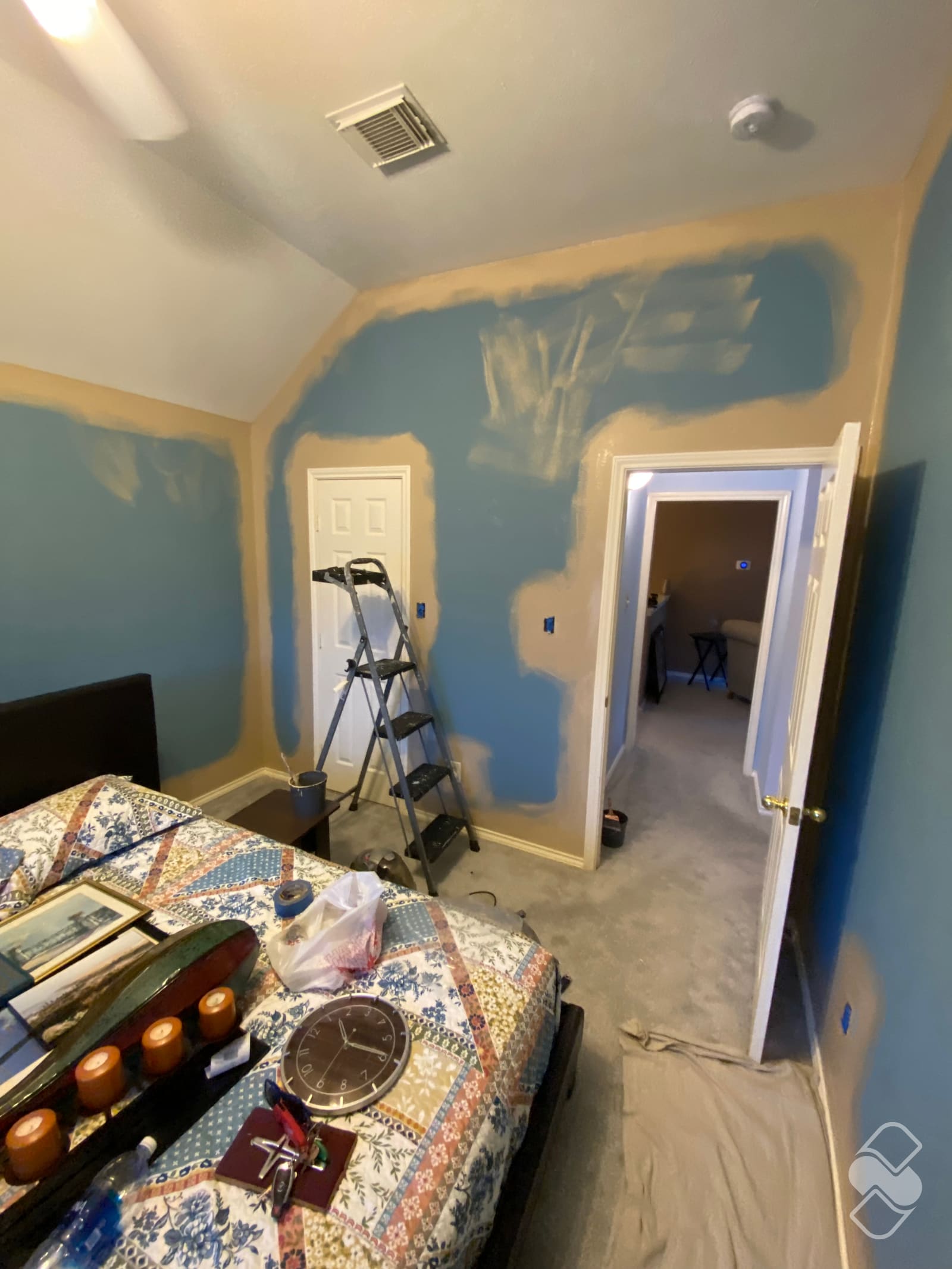
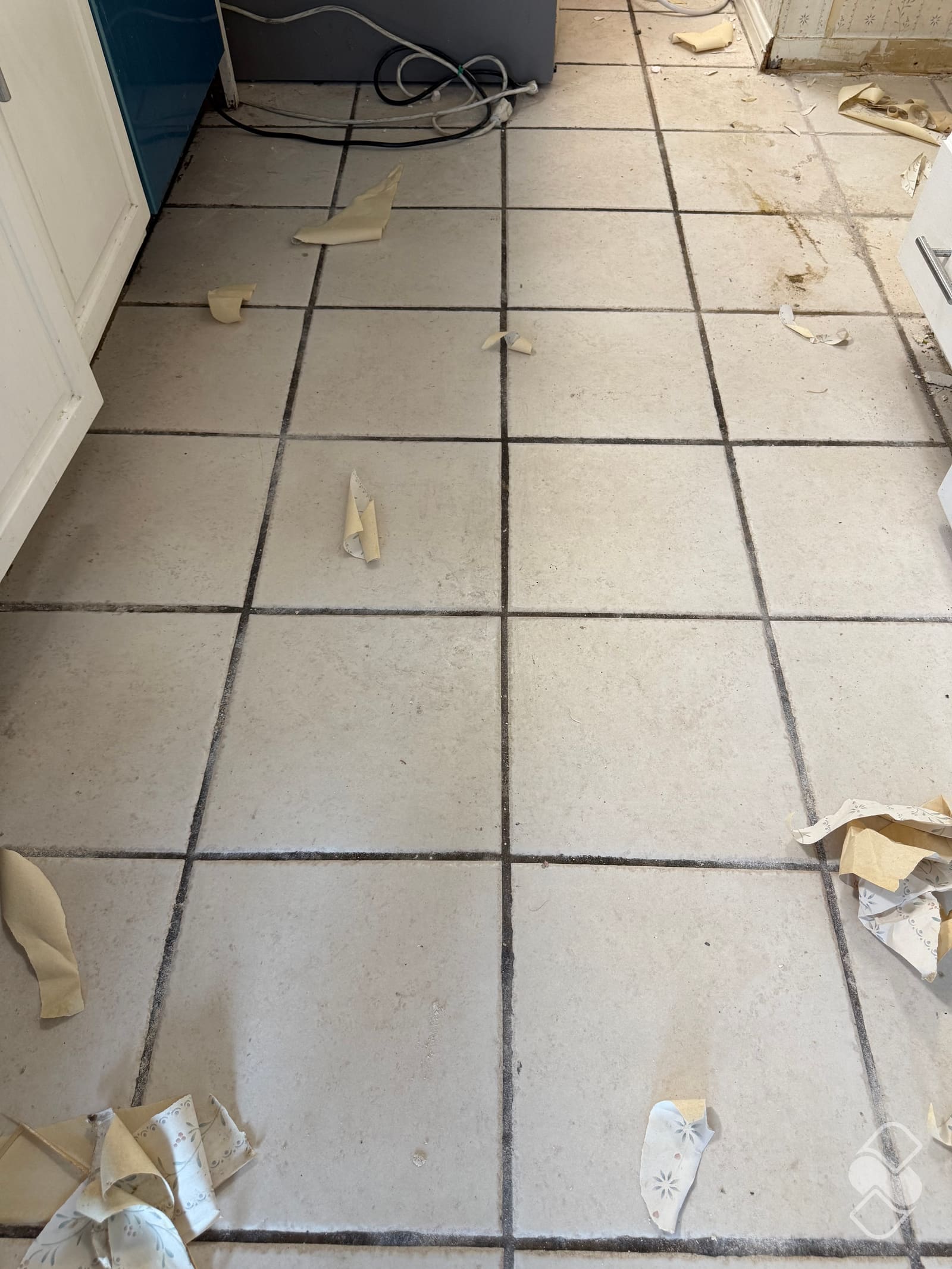
This is where a paint timeline stops being a paint timeline. In the townhome, three rooms had paper: stripes in one bath, floral in the other, a border in the pantry. Paper comes off, the glue behind it comes off, the wall gets retextured to match the rest of the house, and that texture dries before primer. A patch that does not match the texture around it usually reads as a patch after paint, which is why matching it well is slow work. Each of those steps tends to be its own day or part of one, and rushing any of them shows.
The same holds for a ceiling that has been opened for a repair, like the kitchen ceiling in that townhome. Drywall, tape, float, texture, dry, prime, paint. If someone quotes a one-day repaint on a room with wallpaper or an open ceiling, ask what they are planning to do about the wall underneath. Our texture matching page covers what matching an existing pattern involves.
Paint before or after new flooring?
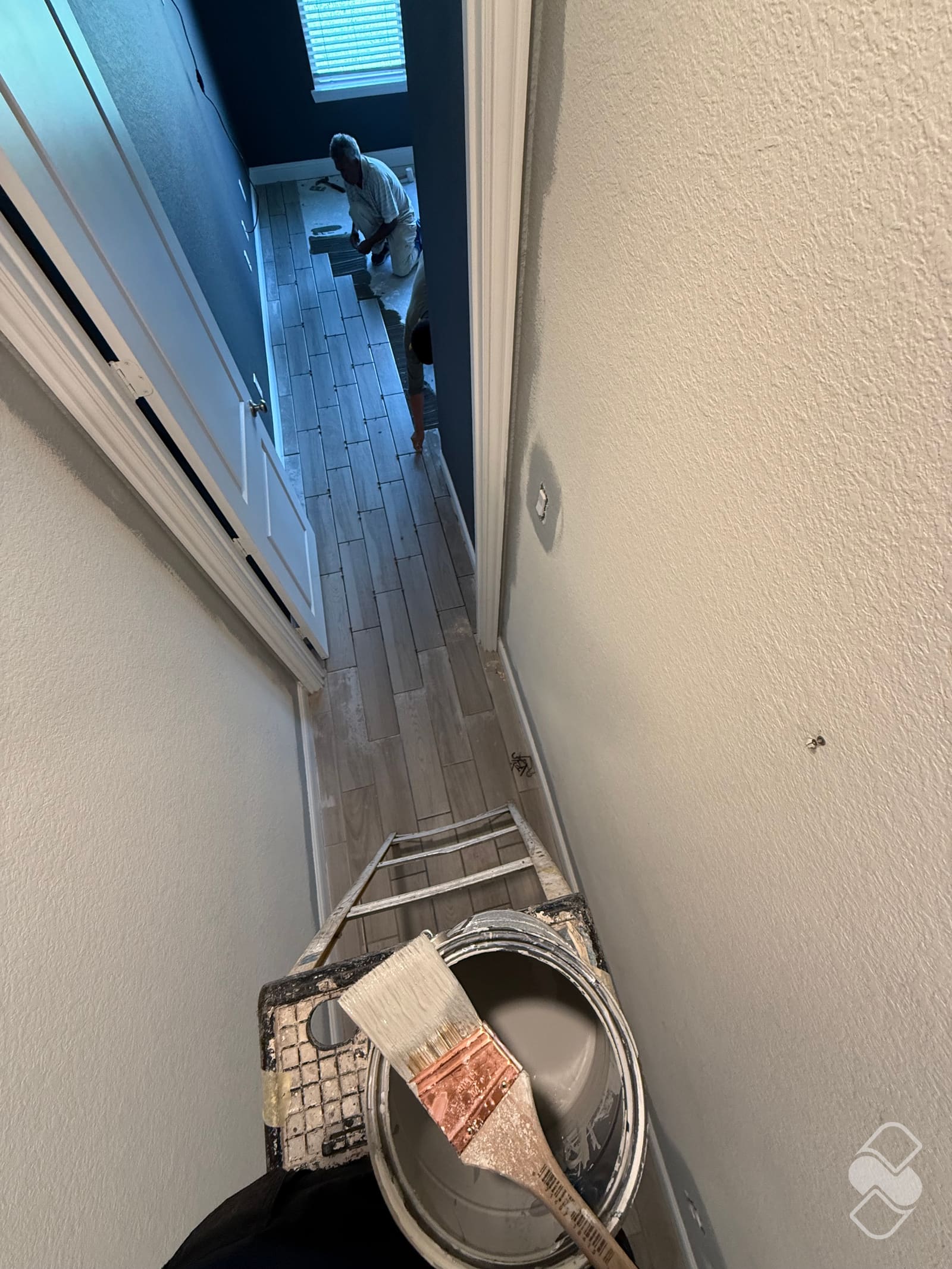
Before, every time we can arrange it. Dede's master bedroom in Katy is the clean example: with the carpet out and the room down to the slab, the walls and the inset of the tray ceiling went from builder cream to a deep charcoal before any tile came into the room. There was nothing on the floor to protect but the slab, and that is the point of the order: anything that drips lands on a surface about to be covered, not on new tile.
The one exception is baseboards. If new baseboards are going on after the floor, they get caulked and painted after the floor is down, with the floor protected. So the real order is walls and ceilings, then floors, then baseboards and touch-up, the same order our make-ready guide runs. Our carpet to plank guide covers why the baseboards belong to the flooring job.
Interior painting quote: what should it include?
Two painting quotes for the same house can be far apart and both be honest, if one includes ceilings and trim and the other does not. You can only compare them if each spells out the same things. Here is what we write down, line by line. Our written scope guide covers the general version; this is the painting version.
- Rooms, by name. Not "whole interior." Living room, dining, kitchen, each bedroom, each bath, hall, stairwell.
- Ceilings. Which rooms, or none.
- Trim. Baseboards, casings, crown, chair rail: included, or left as is like Zubin's baseboards were.
- Doors. How many, both faces or one, frames included or not.
- Closets and pantry. Walls only, or shelves too. In the townhome the pantry shelves were on the list.
- Prep items. Patches, nail pops, caulk, sanding, wallpaper removal, texture repair, each named.
- Primer. Where it goes and why: stains, patches, bare drywall, color changes.
- Coats. One or two, per area.
- Sheen per area. Flat on ceilings, something scrubbable in kitchens and baths, enamel on trim and doors, named room by room.
- Color count. How many colors, and which goes where, including accent walls.
- Protection. Floors, furniture, fixtures: how they are covered.
- Cleanup. Daily, and at the end.
- Touch-up walkthrough. That there is one, in daylight, with you.
If a quote is a single line with a total under it, that is not a scope you can compare. Our guide to comparing bids walks through the line-by-line method for any trade.
What moves an interior painting price
In our experience, wall condition moves the price more than square footage. A house that needs wallpaper down and texture repaired usually costs more to paint than a bigger house with clean walls. Adding ceilings and trim turns one pass into three, so a walls-only quote and a walls, ceilings and trim quote are not the same job.
Doors add up, because each one is its own small project. A dark color over white usually adds a coat. Five colors usually cost more than one neutral, because every change means more taping. A furnished, occupied house tends to cost more than an empty one for the same rooms. Paint grade is on the list too, and we tell you where a premium can earns its price and where it does not. We walk it, measure it, count the doors and write it down.
What to ask whoever quotes it
- Are ceilings, trim, doors and closets in this number, or walls only?
- What prep is included, and is wallpaper removal or texture repair priced separately?
- Where will you prime, and how many coats are in the price per area?
- What sheen goes in each room, and how many colors are we at?
- If I am getting new floors, are you painting before the floors go in?
- If you find more repair once the furniture is moved, how is that priced, and before or after you do the work?
- How many days is this, and is there a walkthrough with me before you call it done?
Done right is cheaper than done twice, and in painting that usually comes down to prep you do not see and a scope you can read. If you are in Katy, Cypress or anywhere in Greater Houston and want interior painters who will quote the rooms, the coats and the sheens by name, our interior painting page shows the process. Or send us the room and we will walk it with you.